
Moving day damage is any harm to your belongings or property that occurs during the loading, transport, or unloading process of a relocation. It happens to more movers than most people expect, and the way you respond in the first few minutes often determines whether you get fairly compensated. I’ve watched plenty of moves go sideways not because of the damage itself, but because of what happened—or didn’t happen—right after it was found.
Nobody plans for a cracked dresser or a dented refrigerator, but ignoring it costs you leverage. We built this guide around the exact sequence that protects your claim.
This guide covers what counts as real damage versus normal wear, the first steps to take the moment you spot a problem, how documentation and the bill of lading protect your claim, the different types of liability coverage movers offer, and what happens if a claim gets denied.
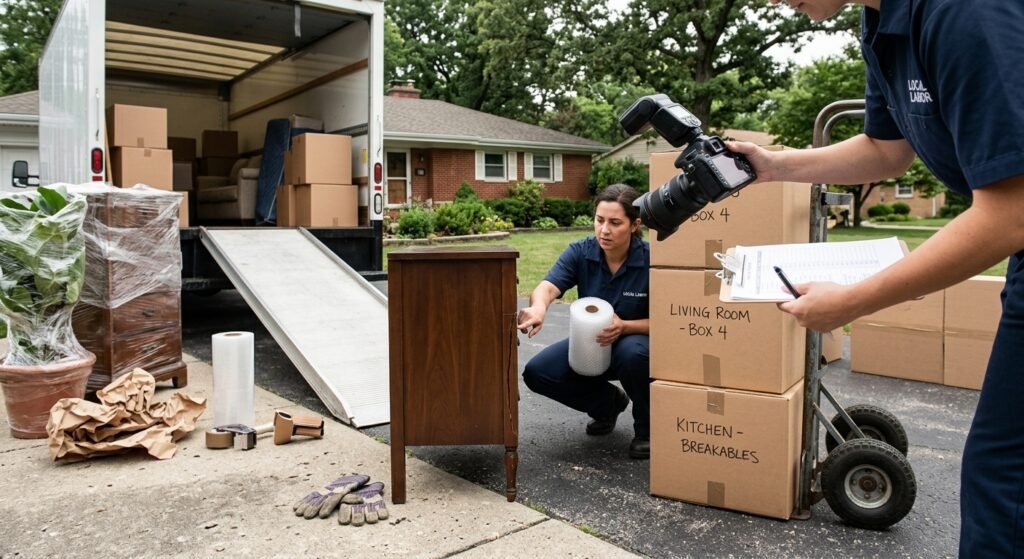
What Counts as “Damage” on Moving Day
Damage on moving day is any physical harm to an item or property that did not exist before the move began. Scratches on a wall from a shifted couch count. So does a shattered mirror packed in a mover’s box. I draw a hard line between cosmetic damage and structural damage because insurance adjusters do too.
Pre-Existing vs. New Damage
Pre-existing damage is anything already present before the movers touched the item, and this distinction is the single biggest factor in whether your claim gets approved. We always tell clients to note the condition of high-value items before the truck even arrives.
A scuffed table leg from three years ago isn’t the mover’s responsibility. A fresh crack from today is.
Cosmetic vs. Structural Damage
Cosmetic damage affects appearance without affecting function, like a scratch on a wood veneer. Structural damage affects whether the item still works or holds together, like a broken table leg or an appliance that won’t power on. Structural damage repair cost estimates tend to run far higher than cosmetic fixes, which is part of why movers separate the two categories on claim forms.
Why Damage Gets Discovered on Moving Day Specifically
Damage surfaces on moving day because that’s when items are physically handled, lifted, and transported the most in a single stretch of time. I’ve seen more damage happen during the load-out from a tight stairwell than during the actual drive.
Packing and Loading Stress Points
Loading stress points are the specific moments in a move when items face the highest risk: carrying furniture through narrow doorways, stacking boxes in a truck, and securing items for transit. Doorframes, stairwells, and truck ramps account for a disproportionate share of reported incidents.
Delayed Discovery After Delivery
Delayed discovery happens when damage isn’t noticed until days after the move, often because boxes sit unopened. This is exactly why claim filing deadlines exist, and why I push clients to unpack fragile items within 24 to 48 hours instead of letting boxes sit for weeks.
The First 10 Minutes: Immediate Steps When You Spot Damage
The first step when you spot damage is to stop and document it before signing any paperwork or letting the movers leave. This single habit prevents more disputes than any insurance policy.
- Stop the crew before they leave the property.
- Photograph the item from multiple angles.
- Set the item aside, separate from already-unpacked boxes.
- Note the time and who was present.
- Ask the crew lead to acknowledge the damage in writing if possible.
Stop Before You Sign Anything
Signing the delivery paperwork before noting damage can waive your right to claim it later, so I always tell people to slow down at this exact moment. A few extra minutes here can save weeks of back-and-forth.
Isolate the Damaged Item
Isolating the item means physically separating it from everything else so it isn’t accidentally moved, repacked, or “lost” in the shuffle of unloading. This keeps the evidence clean if an adjuster needs to inspect it later.
How to Document Damage Properly
Proper documentation means photos, video, and written notes captured at the time of discovery, not reconstructed from memory days later. I treat this step as non-negotiable on every claim I’ve helped walk through.
- Take wide shots showing the item’s location and condition.
- Take close-up shots of the specific damage.
- Record a short video panning across the full item.
- Write down the date, time, and crew members present.
- Save original packaging if the item was boxed by the movers.
Photo and Video Evidence Standards
Photo and video evidence should be timestamped, well-lit, and taken before the item is moved again or repaired. Blurry or after-the-fact photos are one of the most common reasons claims get challenged.
Written Notes That Hold Up Later
Written notes that hold up later include specific details: what broke, how it was packed, and who was present, not vague statements like “something got damaged.” Specificity is what separates an approved claim from a denied one.
The Bill of Lading and Why It Matters
The bill of lading is the legal contract between you and the mover that lists your inventory and the condition of your goods at pickup. It is the single most important document in any damage dispute, because it’s the baseline everyone compares against.
Noting Exceptions Before You Sign
Noting exceptions means writing specific damage or missing items directly on the bill of lading before signing it, rather than trusting a verbal promise from the crew. I’ve seen verbal assurances disappear completely once a claim gets filed.
What Happens If You Already Signed
Signing without noting exceptions doesn’t automatically kill your claim, but it does shift the burden of proof onto you to show the damage happened during transport. This is a harder position, not an impossible one.
Reporting Damage to the Moving Company
Most moving companies require damage to be reported within nine months of delivery under federal regulations for interstate moves, though many require much faster notice in their own contracts. I always tell clients to report the same day if they can, regardless of the legal deadline.
Verbal Notice vs. Written Notice
Verbal notice alone rarely satisfies a mover’s formal claim requirements, so a follow-up email or claim form submission is what actually starts the clock on resolution. Keep a copy of whatever you submit.
Claim Filing Deadlines
Claim filing deadlines vary by mover and contract type, and missing one is one of the fastest ways to lose an otherwise valid claim. I treat the moment damage is discovered as the start of a countdown, not something to revisit later.
Types of Moving Liability Coverage Explained
Moving liability coverage determines how much a mover owes you if your belongings are lost or damaged, and the amount varies dramatically depending on which coverage type was selected before the move. The table below shows how the three common types compare.
| Coverage Type | Cost | Payout Basis | Typical Use Case |
| Released Value Protection | Usually free, included by default | $0.60 per pound per item | Basic, minimum-cost moves |
| Full Value Protection | Added cost, based on declared value | Full repair, replacement, or cash value | Most recommended for valuable items |
| Third-Party Moving Insurance | Separate policy purchased independently | Varies by policy terms | High-value or specialty items |
Released Value Protection
Released value protection is the default, no-cost coverage that pays a minimal amount based on weight rather than actual item value. A 50-pound television damaged in transit might only net you thirty dollars under this option.
Full Value Protection
Full value protection requires the mover to repair, replace, or cash-settle a damaged item at its current market value rather than its weight. This option costs more upfront but closes the gap that released value protection leaves wide open.
Third-Party Moving Insurance
Third-party moving insurance is a separate policy purchased from an outside provider, often used when a mover’s own coverage caps out below an item’s actual value. Specialty item insurance for antiques and artwork becomes relevant here for anyone moving particularly valuable pieces.
How the Claims Process Works
The claims process starts when you submit a written claim form detailing the damage, and it typically moves through acknowledgment, investigation, and settlement phases. I’ve seen this take anywhere from a few days to a few months depending on complexity.
- Submit the claim form with photos and documentation attached.
- The mover acknowledges receipt, usually within a set number of business days.
- An adjuster or claims representative reviews the evidence.
- The mover issues a settlement offer or requests more information.
- You accept, negotiate, or escalate the offer.
What Information the Mover Will Request
Movers typically request the bill of lading, photos, an inventory list, and sometimes a repair estimate before processing a claim. Having these ready before you even call speeds the whole process up noticeably.
Typical Resolution Timelines
Resolution timelines for most moving claims run thirty to one hundred twenty days, depending on the complexity of the damage and whether a repair estimate is required. Simple, well-documented claims move faster than disputed ones.
Damage to Specific Item Categories
Different item categories carry different damage risks and different claim considerations, which is why movers often process them differently. I treat furniture, electronics, and self-packed boxes as three separate conversations with clients.
| Item Category | Common Damage Type | Claim Consideration |
| Furniture and Wood Items | Scratches, cracked legs, warping | Easier to prove visually |
| Electronics and Appliances | Internal damage, won’t power on | May need a technician’s report |
| Boxes Packed by Mover | Breakage inside sealed box | Mover liability is stronger |
| Boxes Packed by Owner | Breakage inside sealed box | Mover liability is often limited or excluded |
Furniture and Wood Items
Furniture and wood item damage is usually visible immediately, which makes it one of the more straightforward categories to document and claim. Scratches, cracked joints, and warped panels photograph clearly and leave little room for dispute.
Electronics and Appliances
Electronics and appliance damage often isn’t visible from the outside, since the unit can look fine but fail to power on internally. This is exactly why a technician’s inspection report strengthens a claim far more than photos alone.
Boxes Packed by the Mover vs. by You
Boxes packed by the moving crew themselves carry stronger mover liability than boxes you packed yourself, since professional movers accept responsibility for their own packing work. Self-packed boxes with broken contents are one of the most commonly disputed claim categories.
When Damage Affects the Property, Not Just Your Belongings
Property damage from a move refers to harm done to the home itself, not the items being transported, like scuffed walls, dented doorframes, or scratched flooring. I treat this as its own category because the claim path is slightly different.
Wall, Floor, and Doorway Damage
Wall, floor, and doorway damage typically gets documented the same way as item damage, with photos taken immediately and noted before the crew leaves the property. Security deposit disputes over move-out damage become relevant here for renters trying to separate mover-caused damage from pre-existing wear their landlord might otherwise charge them for.
What If the Moving Company Denies the Claim
A denied claim means the mover has reviewed your documentation and determined they aren’t liable for the reported damage, often citing pre-existing condition or insufficient evidence. This isn’t always the end of the conversation.
Escalation Options
Escalating a denied claim usually means requesting a formal review, providing additional documentation, or pursuing mediation through the mover’s dispute resolution process. Most movers have a secondary review step before a claim is fully closed.
Regulatory Complaint Channels
Regulatory complaint channels, such as filing with the Federal Motor Carrier Safety Administration for interstate moves, exist specifically for situations where a mover’s internal process fails to resolve the dispute fairly. These complaints carry real weight because they create a public record tied to the mover’s operating license.
Preventing Damage Before It Happens
Preventing damage before it happens comes down to two things: how items are packed and which mover you choose. I’ve found that most claims trace back to one of these two factors more than bad luck.
Packing Practices That Reduce Risk
Packing practices that reduce risk include using appropriately sized boxes, wrapping fragile items individually, and avoiding overpacked or underfilled boxes that shift during transit. Proper packing techniques for fragile items make a measurable difference in how often claims get filed at all.
Choosing a Mover With Clear Liability Terms
Choosing a mover with clear liability terms means reviewing their coverage options, claim deadlines, and reputation before move day, not after something breaks. A mover who explains coverage clearly upfront is usually the same one who handles claims fairly later.
Local Considerations for Movers in Skokie, IL
Local movers in Skokie, IL often deal with specific building types—older apartment complexes, condo associations, and HOA-managed properties—that each carry their own move-in and move-out damage policies. I’ve handled plenty of moves here where the building’s own rules mattered as much as the mover’s liability terms.
Apartment, Condo, and HOA Moving Rules
Apartment, condo, and HOA moving rules frequently require certificates of insurance, designated move times, and protective coverings for hallways and elevators before a move can even begin. Skipping this step can lead to disputes that have nothing to do with the moving company at all.
Conclusion
Moving day damage is manageable once you understand documentation, liability coverage, and claim deadlines working together. We’ve walked through every stage, from the first ten minutes to what happens if a claim gets denied.
Preparation now prevents frustration later, and the right mover makes this entire process smoother. We’re ready to help you move with confidence—reach out to ASHER MOVERS LOCAL & LONG DISTANCE today.
Frequently Asked Questions
Can I refuse delivery if I see damage?
You can refuse delivery of a specific damaged item, but refusing the entire shipment is rarely necessary. Note the damage on the delivery paperwork before the crew leaves.
Does the mover have to fix or pay for damaged items?
Movers are required to compensate you based on your selected liability coverage, not automatically repair items. The payout amount depends on whether you chose released value or full value protection.
How long do I have to file a damage claim?
Federal regulations allow up to nine months for interstate moves, but many movers require much faster notice in their contracts. Report damage the same day whenever possible.
What if the box looks fine but the item inside is broken?
Concealed damage inside an intact box is still claimable, but it requires prompt reporting and clear photos of the packaging and contents. Keep the original box as evidence.
Will my claim be denied if I signed the paperwork?
Signing without noting exceptions makes a claim harder, not impossible, since you’ll need additional evidence to prove the damage happened during the move. Documentation becomes even more important in this situation.
Does moving insurance cover accidental damage I caused?
Standard moving liability coverage only applies to damage caused by the moving company, not damage you caused while packing or handling items yourself. Third-party insurance policies sometimes offer broader protection.
Can I take photos before the movers even start loading?
Yes, and doing so establishes a clear baseline condition for your belongings before the move begins. This step makes any later claim significantly easier to prove.
