
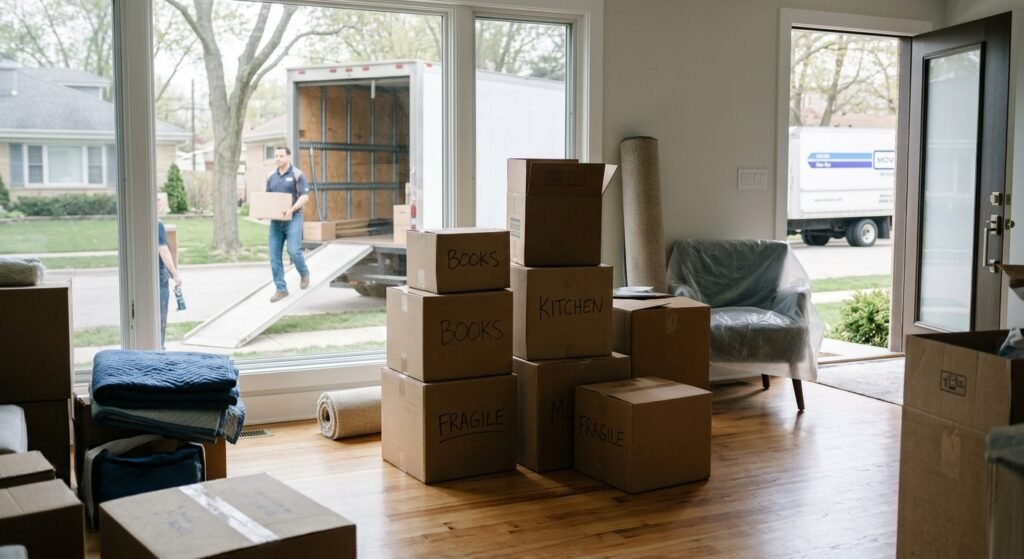
I’ve worked with families across Skokie who assume a bigger moving company automatically means better service, and that’s just not true. Family-owned local movers often deliver more personalized care, while national brands bring standardized systems and broader resources. The right choice depends on your move size, budget, and how much hands-on communication you want.
Picking a mover isn’t only about price. It affects how your belongings get packed, whether prohibited items cause delays, and how smoothly moving the day actually goes.
I’m going to walk through what separates family-owned movers from national brands, where costs diverge, which packing rules apply no matter who you hire, and how to pick the right fit for your Skokie move.
What Sets Family-Owned Local Movers Apart in Skokie, IL
Family-owned movers build their reputation on repeat business and word-of-mouth referrals within the community they serve. I notice these crews tend to know Skokie’s neighborhoods, building layouts, and parking restrictions better than a national dispatcher ever could.
A family-owned mover is a locally operated business that typically handles a smaller volume of moves with the same core crew on every job. That consistency means the people who quote your move are often the same people loading the truck.
Personalized Service From Local Crews
Smaller teams mean fewer handoffs between sales, dispatch, and the actual movers. I see this translate into fewer miscommunications about fragile items, specific timing needs, or special requests.
Local crews also tend to have more flexibility on scheduling. And because repeat referrals matter so much to a small operation, accountability runs deeper.
What National Moving Brands Offer Skokie Households
National brands operate through a franchise or branch network, which gives them access to larger fleets, standardized training programs, and broader service areas. This structure supports long-distance and interstate moves more easily than a single-location operation.
A national moving brand is a franchise-based or corporately owned relocation company that follows uniform pricing models and operational procedures across multiple locations. That consistency can be reassuring if you’re moving across state lines and want predictable processes at every stop.
Standardized Processes and Corporate Backing
Corporate backing means more resources for claims handling, insurance options, and customer service departments. I’ve found this matters most for complex long-distance moves with multiple logistics points.
But that same standardization can feel impersonal. Dispatch centers are often handling dozens of moves simultaneously, and your specific Skokie address is just one line on a schedule.
Cost Differences Between Local and National Movers
Pricing structures diverge in ways that surprise a lot of first-time movers. Local companies in Skokie typically price based on hourly labor and truck size, while national brands often weight pricing around distance, weight, and corporate overhead.
According to the U.S. Bureau of Labor Statistics, the moving industry employs hand laborers at a median hourly wage that directly influences how local crews structure their rates. That wage baseline helps explain why smaller moves often cost less with a local company than with a national one carrying higher overhead.
Hidden Fees to Watch For With Either Option
Stair fees, long-carry charges, and bulky item surcharges show up with both local and national movers. I always tell clients to ask for a full fee breakdown before signing anything, not just the headline hourly rate or binding estimate.
A detailed moving cost estimate accounts for these variables upfront so nothing blindsides you on moving day.
Packing Rules and Prohibited Items Both Movers Follow
Federal and state regulations govern what movers can legally transport, and this applies equally to family-owned companies and national brands. Neither type of mover can load hazardous materials, perishables, or certain high-value items without special arrangements.
The Federal Motor Carrier Safety Administration classifies hazardous household materials that movers are prohibited from transporting, including propane tanks, paint, and corrosive chemicals. I’ve seen moves get delayed at the last minute because a family didn’t realize their garage shelf of cleaning supplies couldn’t go on the truck.
Items Movers Cannot Legally Transport
Propane tanks, car batteries, fireworks, and pool chemicals top the list of commonly rejected items. Perishable food and live plants also get turned away by most crews, regardless of company size.
A prohibited items checklist helps you sort these out days before the truck arrives, not the morning of.
How to Choose the Right Mover for Your Skokie Move
Your decision ultimately comes down to move complexity, budget, and how much personal attention you want throughout the process. A small local move across Skokie favors a family-owned company’s flexibility and local knowledge.
A long-distance relocation with multiple stops or a corporate transfer timeline often benefits from a national brand’s infrastructure and standardized tracking systems.
Questions to Ask Before You Book
Ask any mover directly about licensing, insurance coverage, and how they handle damaged items. I also recommend asking who specifically will show up on moving day and whether that crew is employed directly or subcontracted.
A local moving checklist keeps these questions organized so you compare quotes on equal footing.
Conclusion
Family-owned movers and national brands both get Skokie families relocated safely, just through different operational models. Your move’s size, distance, and complexity should drive which one fits best.
Packing rules and prohibited items apply no matter who you hire, so preparation matters either way.
We at ASHER MOVERS LOCAL & LONG DISTANCE combine local Skokie expertise with the resources to handle long-distance moves too. Reach out and we’ll walk you through what your specific move actually needs.
Frequently Asked Questions
Are family-owned movers cheaper than national brands?
Family-owned movers are often cheaper for local, smaller moves because they price by hourly labor rather than distance and corporate overhead. Long-distance moves can shift that cost advantage toward national brands with established routes.
Can movers transport propane tanks or paint?
No, movers cannot legally transport propane tanks, paint, or other hazardous materials under federal safety regulations. I recommend disposing of these items properly or transporting them yourself in a vehicle.
Do national moving brands offer better insurance coverage?
National brands typically offer more standardized insurance tiers due to corporate backing and claims infrastructure. Family-owned movers still carry required liability coverage, so I always confirm policy details directly with either type of company.
How do I know if a local mover is licensed in Illinois?
I check the Illinois Commerce Commission’s registry to confirm a mover holds an active household goods license. Any legitimate local company should provide this number without hesitation when asked.
What items should I pack myself instead of letting movers handle them?
Valuables, important documents, and hazardous household chemicals should travel with you rather than on the moving truck. This keeps irreplaceable items secure and avoids any conflict with prohibited item rules.
Is it better to hire a local or national mover for a long-distance move?
National brands generally handle long-distance and interstate moves more smoothly due to established routes and larger fleets. Local Skokie movers that also offer long-distance service, like ours, can still provide that same reach with more personalized communication.
