
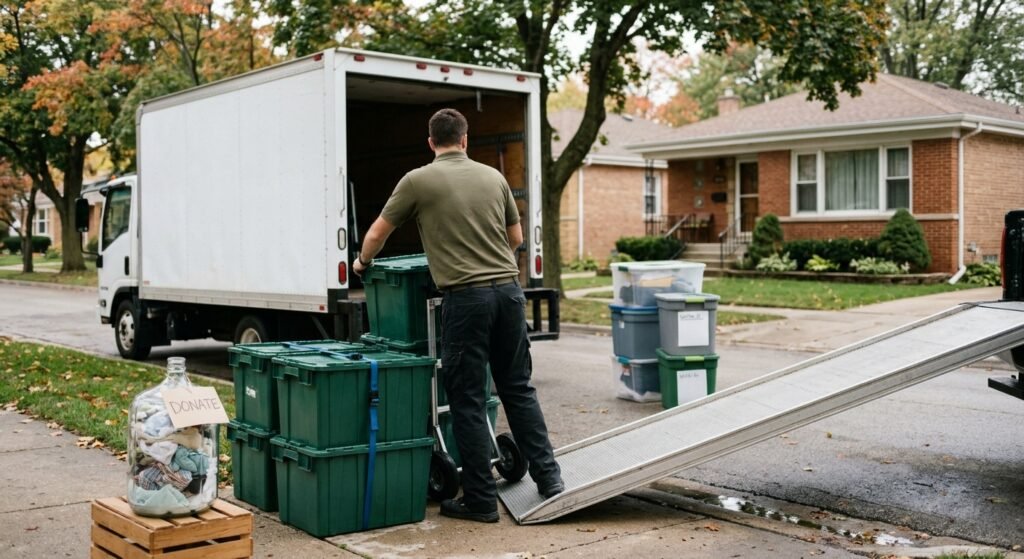
An eco-friendly mover is a moving company that reduces waste and emissions through reusable packing materials, fuel-efficient routing, and responsible disposal of unwanted items. I’ve watched more Skokie families ask about this option every year, and it’s not just a trend anymore. It’s becoming the default expectation for a responsible move.
Landfills fill up fast with cardboard and packing peanuts every moving season, and that waste adds up block by block. A greener move protects your budget just as much as it protects the planet, since reusable bins and smarter routes cut costs too.
I’ll walk you through what actually makes a mover green, how to pack with less waste, and what questions separate a real eco-friendly company from one that just slaps the word on a flyer. Then I’ll cover prepping your home the sustainable way and what it really costs to go green on moving day.
What Makes a Moving Company Eco-Friendly
A mover earns the eco-friendly label through specific, verifiable practices, not marketing language. I look at three things first: the materials they use, the fuel efficiency of their fleet, and how they handle unwanted items at the end of a job.
Cardboard waste from a single household move can fill several large trash bags. Companies serious about sustainability replace that waste stream entirely, swapping in materials designed to be used again and again.
Sustainable Packing Materials and Supplies
Reusable plastic moving bins replace cardboard boxes entirely on many eco-conscious jobs. I see movers in Skokie increasingly stock biodegradable packing peanuts and recycled paper padding instead of bubble wrap made from virgin plastic.
Furniture blankets and straps get reused move after move instead of thrown out. That single shift keeps thousands of pounds of material out of landfills every year across a mid-sized moving company’s client base.
Fuel-Efficient Trucks and Route Planning
Truck emissions make up a real chunk of a move’s environmental footprint, and route planning matters more than most people realize. A shorter, smarter route burns less fuel and gets your belongings there faster.
Newer trucks with better fuel economy and properly maintained engines cut emissions substantially compared to older fleets. I always ask a company about fleet age and whether they batch local jobs to reduce empty return trips.
Green Packing Practices That Cut Down Waste
Packing generates more trash than almost any other part of a move, and most of it is avoidable. I focus on swapping disposable materials for reusable ones and trimming the volume of stuff that gets boxed up in the first place.
Every box you don’t need to buy is one less box headed to a landfill. That math adds up fast across an entire household.
Reusable Bins Versus Cardboard Boxes
Plastic reusable bins stack more securely in a truck and survive dozens of moves without falling apart. Cardboard, on the other hand, usually gets crushed, taped over, and tossed after a single use.
I rent bins for local moves whenever a company offers them, because they protect fragile items better too. The thicker plastic walls absorb bumps that would dent a cardboard box.
Donating and Recycling Items Before You Move
Sorting through closets before moving day cuts your load and keeps usable items out of the trash. Local donation centers in the Skokie area take furniture, clothing, and housewares in good condition.
Goodwill Industries reports that donated goods divert millions of pounds from landfills across its network annually. I always recommend a donation run the week before packing starts, since it’s one less thing to pack and ship.
How to Choose a Sustainable Mover in Skokie, IL
Not every company that claims to be green actually operates that way, so I vet them with direct questions. Vague answers or marketing buzzwords without specifics are a red flag worth taking seriously.
A real eco-friendly mover can tell you exactly what they changed in their operations and why. If they can’t explain it, they probably haven’t done it.
Questions to Ask About Their Eco Practices
I ask every moving company the same handful of questions: do they offer reusable bins, what’s their fleet’s average fuel economy, and do they partner with local donation centers. Their answers tell you fast whether sustainability is a real policy or just a talking point.
A company that hesitates or redirects the conversation usually isn’t tracking these metrics at all. The ones that answer confidently usually have the practices to back it up.
Certifications and Green Partnerships to Look For
Some movers partner with local recycling programs or hold certifications tied to sustainable business practices. The U.S. Environmental Protection Agency runs a Green Power Partnership that recognizes businesses sourcing renewable energy for their operations.
I look for movers who mention specific partnerships rather than generic sustainability statements. A named program or certification is something you can verify, and that matters.
Preparing Your Home for an Eco-Conscious Move
Getting your home ready the sustainable way starts well before the truck shows up. I always tell people to think in terms of reducing volume first, then worry about how to pack what’s left.
A lighter load means less fuel burned and fewer boxes used overall. It’s the single biggest lever you control as the customer.
Decluttering Responsibly Before Moving Day
Sorting items into keep, donate, and recycle piles cuts your moving volume significantly before a single box gets packed. I set aside a full weekend for this step on larger homes, since it always takes longer than expected.
Electronics, textiles, and furniture each have different responsible disposal paths. Checking your local municipality’s guidelines before moving day prevents items from ending up in the wrong bin.
Items That Need Special Eco-Safe Disposal
Paint, batteries, chemicals, and electronics can’t go in a regular trash bin or a moving truck in most cases. These items need a certified hazardous waste facility or an e-waste recycling center.
Skokie residents have access to local hazardous waste collection events through the village and surrounding Cook County programs. I always recommend checking disposal dates well ahead of a move, since these events run on a limited schedule.
Cost and Convenience of Going Green on Moving Day
People assume eco-friendly moving costs more, and sometimes it does, but not always. The price gap depends heavily on which company you choose and how they’ve built sustainability into their pricing model.
Convenience is the bigger worry for most of my clients. Going green shouldn’t mean sacrificing a smooth, on-time move.
Is Eco-Friendly Moving More Expensive
Reusable bin rentals sometimes cost a bit more upfront than buying cardboard boxes outright. But you skip the expense of buying tape, bubble wrap, and packing paper, which closes most of that gap.
Fuel-efficient routing and fewer wasted trips can actually lower your final bill with some companies. The savings show up in labor hours and reduced mileage charges rather than in the box rental line item.
Balancing Sustainability With a Tight Timeline
A tight moving timeline doesn’t rule out sustainable choices. Reusable bins get delivered and picked up on a schedule that fits most standard moving windows without adding extra days.
I coordinate donation pickups and hazardous waste drop-offs during the same week as packing to avoid any delay. Planning these steps early keeps the whole move on track.
Conclusion
Eco-friendly moving comes down to the materials used, the routes driven, and how responsibly belongings get sorted before the truck arrives. Skokie residents have real options for making a move greener without sacrificing speed or reliability.
Sustainable moving practices are becoming the standard rather than the exception across the industry. Choosing a mover who takes this seriously protects both your belongings and your community.
We build sustainability into every move we handle. Contact ASHER MOVERS LOCAL & LONG DISTANCE today to plan a greener move that still shows up on time.
Frequently Asked Questions
What makes a moving company eco-friendly?
An eco-friendly mover uses reusable packing materials, fuel-efficient trucks, and responsible disposal practices for unwanted items. I look for companies that can explain these practices specifically, not just claim them generally.
Are reusable moving bins better than cardboard boxes?
Reusable bins hold up to dozens of moves and protect fragile items better than cardboard. They also eliminate the waste created by single-use boxes that typically get thrown out after one move.
How do I dispose of paint and batteries before a move?
Paint, batteries, and chemicals need to go to a certified hazardous waste facility rather than the trash or a moving truck. Cook County and Skokie run periodic hazardous waste collection events for residents.
Does eco-friendly moving cost more than a regular move?
It depends on the company, but reusable bin rentals often offset the cost of buying packing supplies outright. Fuel-efficient routing can also reduce labor and mileage charges on the final bill.
Can I donate items instead of moving them?
Yes, donating furniture, clothing, and housewares in good condition to a local center cuts your moving volume and keeps usable goods out of landfills. I recommend scheduling a donation drop-off the week before packing begins.
What should I ask a mover about their sustainability practices?
Ask directly whether they offer reusable bins, what their fleet’s fuel efficiency looks like, and whether they partner with local donation or recycling programs. Specific, confident answers signal a real sustainability policy.
