
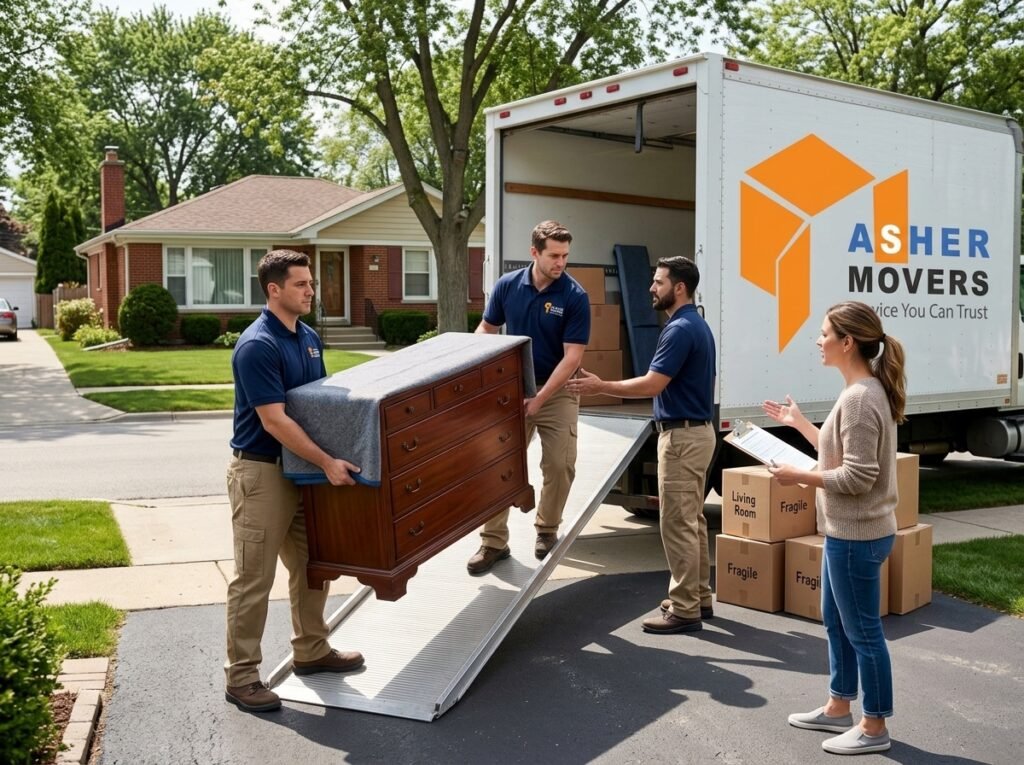
No, professional movers do not expect you to help carry, lift, or load your belongings. Your job is preparation, not labor. Licensed moving crews in Skokie, IL are trained, equipped, and insured to handle the physical work safely. What they do expect is a packed, organized, accessible home and clear communication. Trying to assist with heavy lifting can slow the crew down, void liability coverage, and create safety risks for everyone involved on moving day.
The Direct Answer — What Movers Actually Expect From You
Movers expect you to be ready, present, and decisive — not physically active. Your role is to confirm inventory, label boxes correctly, point out fragile or priority items, and answer questions as the crew works. Professional movers handle the lifting, wrapping, loading, and transport themselves. Hands-on help from customers is rarely welcomed.
Most reputable moving companies, including those serving Skokie and the greater Chicago area, explicitly discourage customer involvement in physical tasks. Their crews follow trained lifting techniques, use specialized equipment like dollies and furniture sliders, and operate under insurance policies that cover only their own personnel. When customers step in, the workflow breaks down, timelines stretch, and liability becomes complicated.
Why Professional Movers Prefer You Stay Hands-Off
Trained movers work in coordinated patterns. Each crew member has a role: one navigates pathways, another stabilizes loads, a third manages the truck. Adding an untrained person disrupts this rhythm and increases injury risk. Insurance policies also draw a hard line — if you injure yourself helping, the moving company is generally not liable, but the situation creates legal and emotional friction. Crews also rely on consistent technique to prevent damage. A homeowner lifting one end of a dresser the wrong way can scratch floors, dent walls, or crack the furniture itself.
What Counts as “Helping” vs. Getting in the Way
Helpful actions include staying available for questions, supervising children and pets, keeping walkways clear, and confirming which items go where. Unhelpful actions include carrying boxes alongside the crew, repacking items as they work, or redirecting the loading sequence. Even offering water is genuinely appreciated — physical labor is not. The clearest rule: if it requires lifting, leave it to the movers.
Understanding what movers expect is the foundation. The next step is preparing your home before movers arrive, which is where most moving-day delays are actually prevented.
How to Prepare Before Movers Arrive in Skokie, IL
Preparation is the real “help” professional movers want from you. Finish all packing at least 24 hours before arrival unless you’ve booked a full-pack service. Disassemble basic items like bed frames if your contract specifies self-prep. Empty drawers, secure loose cords, and remove items from walls.
Reserve parking for the moving truck — important in dense Skokie neighborhoods where street access can be tight. Protect floors with runners if your home has hardwood or new carpet. Keep a separate “essentials box” with medications, chargers, documents, and a change of clothes that travels with you, not the truck.
Packing, Labeling, and Clearing Pathways
Label every box on the top and one side with the destination room and a brief content note. Mark fragile items clearly. Stack boxes by room near the exit, not scattered across the home. Clear hallways, staircases, and doorways completely. These small steps shave significant time off your move and protect your belongings from accidental damage.
When Helping Movers Causes Problems (Liability and Safety)
Physical assistance can trigger real consequences. If you injure yourself lifting alongside the crew, your homeowners or health insurance handles the claim, not the mover’s policy. If your belongings are damaged because you helped carry them, the moving company can deny the damage claim entirely.
There are also regulatory limits on what movers can transport. Hazardous materials, flammables, perishables, and certain personal items fall under items movers cannot transport by federal and state law. Trying to sneak prohibited items into boxes, or insisting the crew take them, creates legal exposure for the moving company and can void your service agreement.
Conclusion
Movers expect preparation, communication, and clear access — not muscle. Your value on moving day is decision-making, not lifting. Trained crews work faster and safer when customers step back and supervise.
For Skokie homeowners, renters, and businesses, knowing where your role ends and the crew’s begins makes every relocation smoother, safer, and more predictable from start to finish.
Ready to plan a smooth, professional move? ASHER MOVERS LOCAL & LONG DISTANCE handles the heavy work so you can focus on what matters. Request your free Skokie, IL moving quote today.
Frequently Asked Questions
Is it rude not to help movers?
Not at all. Professional movers prefer you stay out of the lifting process. Staying available, organized, and decisive is the most respectful form of cooperation.
Should you tip movers if you didn’t help?
Yes. Tipping reflects the quality of service, not your participation. A standard tip is $5 to $10 per mover per hour for excellent work.
Can I help carry boxes to speed things up?
It usually slows things down. Movers follow trained loading sequences, and unplanned help disrupts their workflow and may void damage coverage on those items.
What should I do while movers are working?
Supervise the process, answer questions, manage children and pets, and confirm which items go where. Offer water and keep pathways completely clear at all times.
Do movers expect food or drinks?
Cold water is always appreciated, especially during long moves. Lunch is a kind gesture for full-day jobs but never expected or required by professional moving crews.
