
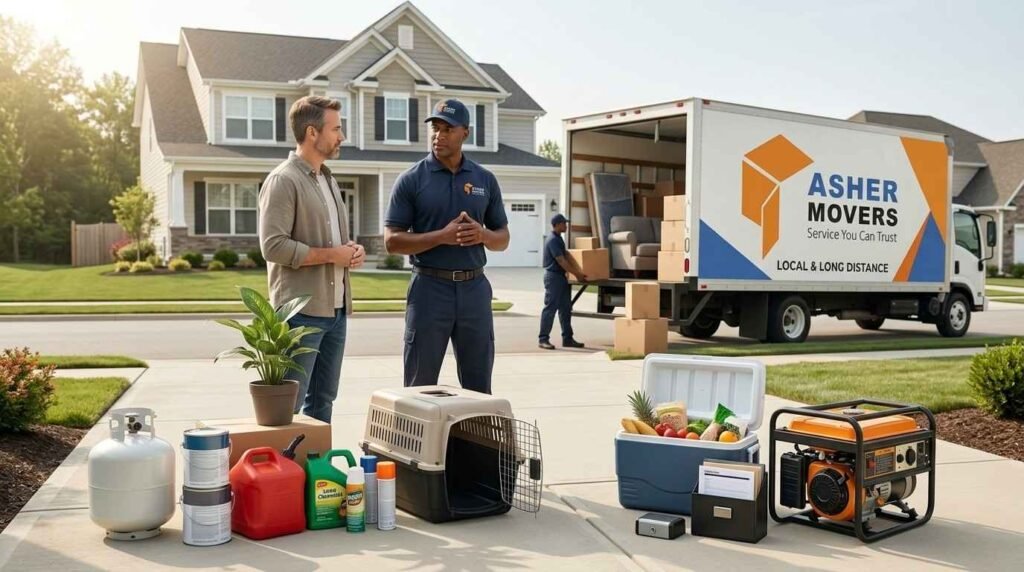
Two Men and a Truck, like most professional moving companies, will not transport hazardous materials, perishable goods, live animals, or certain high-value personal items and knowing this list before moving day saves you real headaches.
Most people don’t find out about these restrictions until a crew member flags something at the door. That moment costs time, money, and stress you don’t need.
This article walks through every major category of non-allowable items, explains why movers refuse them, and gives you practical options for handling each one before your move date.
Hazardous Materials Two Men and a Truck Won’t Load
Professional movers operate under U.S. Department of Transportation regulations that govern what can legally travel in a moving truck. These aren’t arbitrary company policies. They’re federal safety requirements, and violating them puts the crew, the truck, and every other item on board at risk.
The hazardous materials category is the broadest and the most strictly enforced. I’ve seen moves delayed by a single forgotten propane tank sitting in a garage corner. Don’t let that be yours.
Flammable and Combustible Items
Gasoline, lighter fluid, kerosene, motor oil, and propane tanks all fall into this category. So do fireworks, ammunition, and gun powder.
The problem isn’t just fire risk during transport. It’s that a moving truck is an enclosed, unventilated space where fumes accumulate fast. A small leak becomes a serious hazard within minutes.
Drain fuel from lawn mowers, generators, and power equipment completely before your move date. Propane tanks need to be emptied and, in most cases, left behind or transported in your own vehicle with windows down.
Pressurized Containers and Aerosols
Aerosol cans hairspray, spray paint, cooking spray, compressed air canisters are pressurized and temperature-sensitive. A hot truck in a Skokie summer creates exactly the conditions that cause them to rupture.
Most movers will refuse any aerosol that isn’t factory-sealed and clearly labeled. Even then, many crews won’t take them at all.
Pack these in your personal vehicle or plan to replace them at your destination. They’re inexpensive enough that replacing them beats the risk.
Toxic Chemicals and Corrosives
Bleach, ammonia, paint thinner, pool chemicals, pesticides, and fertilizers are all on the no-go list. Corrosives like battery acid and drain cleaners fall here too.
These items can leak, react with each other, and damage everything around them. A single broken bottle of pool shock can ruin furniture, flooring, and clothing and create a chemical hazard inside a sealed truck.
Use up what you can before the move. Donate unopened containers to neighbors or local community groups. Check with your local Skokie municipality for household hazardous waste disposal events they run regularly and accept most of these items for free.
Perishable and Living Items Movers Cannot Transport
This category surprises more people than any other. The logic is straightforward once you think about it: a moving truck isn’t climate-controlled, and transit times are unpredictable.
Food, Plants, and Produce
Open food containers, refrigerated items, and fresh produce don’t survive a move intact. Movers won’t load them because spoilage creates odor, attracts pests, and can damage other belongings.
Frozen food is the biggest practical challenge. Plan your meals around what’s in the freezer in the two weeks before your move. Donate non-perishable pantry items to a local food bank rather than packing them.
Plants are a separate issue. Many states have agricultural restrictions on transporting certain plant species across state lines to prevent the spread of pests and disease. Even for local moves within Illinois, most movers won’t take plants because they’re fragile, soil spills, and liability is murky. Transport them yourself in your car.
Live Animals and Pets
No professional moving company transports live animals. This includes pets, fish tanks with live fish, and any other living creature.
Your pets travel with you. Period. For fish and aquatic animals, research safe fish transport methods well in advance large tanks require draining, and fish need oxygenated transport bags for anything beyond a very short trip.
High-Value and Irreplaceable Items Movers Recommend You Handle Personally
This category is different from the others. Movers can physically move these items in many cases. The issue is liability, not safety.
Standard moving insurance called released value protection covers items at a rate of 60 cents per pound per article. That means a $5,000 laptop that weighs five pounds is covered for exactly $3.00 under the default coverage. That’s not a typo.
Jewelry, Cash, and Important Documents
Jewelry, cash, passports, birth certificates, Social Security cards, wills, deeds, and financial records should never go on a moving truck. The combination of high value, small size, and irreplaceability makes them too risky.
Keep these in a dedicated bag or lockbox that travels with you personally. I tell every client the same thing: if losing it would be catastrophic, it rides in your car.
Sentimental and One-of-a-Kind Items
Family heirlooms, handmade artwork, custom furniture, and items with irreplaceable sentimental value belong in this category too. No dollar amount covers what it means to lose something that can’t be replaced.
For large sentimental items that genuinely need professional handling an antique piano, a custom sculpture ask about specialty moving services or white-glove options that include higher declared value coverage.
Large, Unusual, or Structurally Challenging Items
Some items aren’t refused because of safety or liability. They’re refused because moving them correctly requires equipment, permits, or expertise that falls outside a standard residential move.
Items Requiring Specialty Equipment or Permits
Gun safes over 500 pounds, grand pianos, large hot tubs, and commercial-grade equipment often require cranes, rigging equipment, or structural disassembly. Standard moving crews aren’t equipped for these jobs.
Ask about specialty services when you book. Many moving companies either offer these as add-ons or can refer you to a specialist. Don’t assume it’s included in a standard quote.
Items Attached to the Property
Built-in shelving, ceiling fans, light fixtures, and anything bolted or hardwired to the structure of your home is not a moving company’s responsibility. These are part of the property.
If you want to take them, arrange for a contractor or handyman to remove and reinstall them before the movers arrive. Show up on moving day with those items already boxed and ready to go.
How to Handle Items Your Movers Won’t Take
Finding out something can’t go on the truck isn’t the end of the road. There are practical solutions for every category.
Disposal and Donation Options
Hazardous materials have dedicated disposal channels. The EPA’s household hazardous waste program connects you with local collection events and drop-off sites. Most Illinois counties run these programs regularly, and they’re free.
For usable items cleaning supplies, paint, fertilizer neighbors, community boards, and local Buy Nothing groups are fast and effective. Someone nearby almost always wants what you’re trying to get rid of.
Self-Transport and Storage Solutions
For items you want to keep but can’t put on the truck, your personal vehicle is the most straightforward option. A cooler handles perishables for short distances. A lockbox or padded bag handles valuables.
For larger items that need temporary storage, a climate-controlled storage unit bridges the gap between your move-out and move-in dates. This works especially well for items that need specialty movers book the specialty service separately and store the item until the new space is ready.
What to Expect on Moving Day in Skokie, IL
Skokie moves come with a few local considerations worth knowing. Parking permits for moving trucks are sometimes required on residential streets, and some buildings in the area have elevator reservation requirements for move-in and move-out.
Confirm these details with your building manager or the village at least a week out. A truck that can’t park legally adds hours to your move and costs you money.
On the day itself, have your non-allowable items already separated, labeled, and staged away from everything the movers will load. A clear visual separation prevents confusion and keeps the crew moving efficiently. The faster they work, the less you pay on an hourly rate.
Asher Movers handles local and long-distance moves throughout the Skokie area and will walk you through exactly what to prepare before the crew arrives. Reach out before your move date not the morning of.
Conclusion
Understanding what professional movers won’t transport is as important as knowing what they will. Hazardous materials, perishables, live animals, high-value personal items, and structurally complex pieces all require separate planning.
Getting ahead of these restrictions turns a potential moving-day crisis into a non-issue. The prep work is straightforward once you know the categories.
We’re here to make your Skokie move as smooth as possible. Contact Asher Movers Local & Long Distance today and let’s build a move plan that accounts for everything including the items that need special handling.
Frequently Asked Questions
Will Two Men and a Truck move a gun safe?
Standard crews won’t move gun safes over a certain weight threshold without specialty equipment. Ask specifically when you book many companies offer this as an add-on service or can refer you to a specialist.
Can I pack hazardous items inside boxes so movers don’t see them?
No. Concealing non-allowable items creates serious safety and legal liability for you. If something leaks or causes damage, you’re fully responsible and it voids most moving insurance coverage.
What happens if a mover finds a non-allowable item on moving day?
The crew will set it aside and refuse to load it. You’ll need to handle it on the spot, which can delay the entire move. Sorting non-allowable items before moving day is always the better approach.
Do movers in Illinois have to follow federal hazmat rules?
Yes. Interstate movers are regulated by the Federal Motor Carrier Safety Administration, and even local Illinois movers follow DOT hazardous materials guidelines as standard industry practice.
Can I transport my plants myself if movers won’t take them?
Yes, and that’s exactly what I recommend. Load them in your car, keep them upright, and avoid leaving them in a hot vehicle for extended periods. For long-distance moves, research your destination state’s agricultural import rules first.
What’s the difference between items movers won’t take and items they can’t take?
Items they can’t take are legally or physically prohibited hazardous materials, live animals, items requiring permits. Items they won’t take are typically high-value or sentimental items where liability exposure is too high under standard coverage. Both categories need a separate plan.
How do I find out if my specific item is on the non-allowable list?
Call your moving company directly before your move date and ask. Bring a specific description the item type, size, and any relevant details like whether it’s pressurized, contains fuel, or is attached to the property. A five-minute call prevents a moving-day surprise.
