
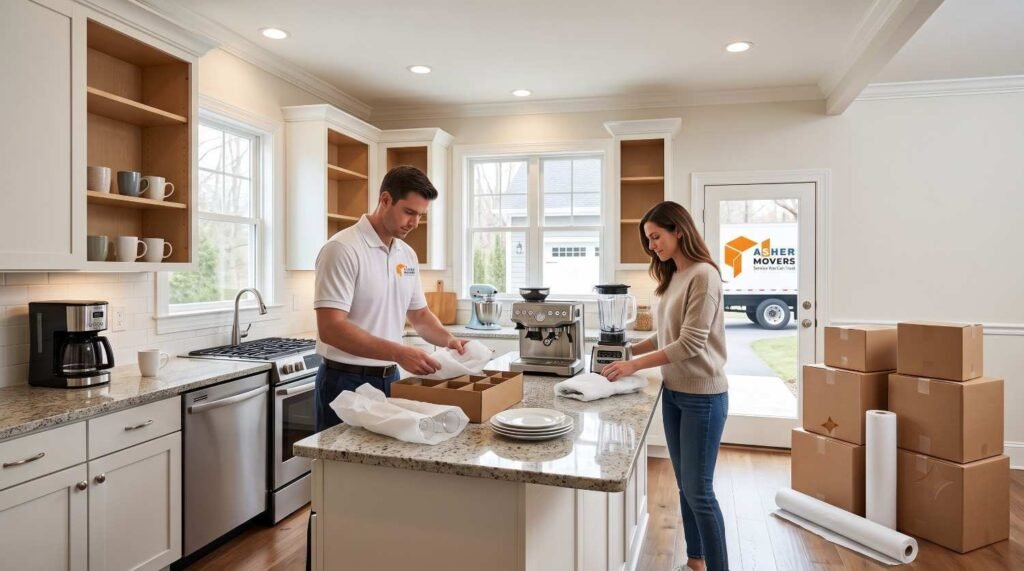
The kitchen is the hardest room to pack when moving and it’s not even close. Between the fragile dishes, the awkward appliances, the half-full pantry, and the cleaning supplies you can’t just toss in a box, it demands more time, more materials, and more decisions than any other room in the house.
Most people underestimate it badly. They leave it for last, run out of packing paper, and end up wrapping wine glasses in dish towels at midnight.
I’m going to walk you through exactly how to pack a kitchen the right way what to start with, what to watch out for, and what most people forget entirely before moving day arrives.
Why the Kitchen Defeats Most Movers
No other room combines fragility, awkward shapes, and sheer volume the way a kitchen does. A bedroom has clothes and furniture. A living room has electronics and décor. The kitchen has all of that complexity compressed into cabinets, drawers, and countertops packed with items that break, leak, or simply refuse to stack.
It’s the combination that gets people. One category alone would be manageable. All of them at once, under time pressure, is where moves fall apart.
The Fragile Problem Glass, Ceramics, and Breakables
Dishes, glasses, mugs, mixing bowls, baking dishes the kitchen holds more breakable items per square foot than anywhere else in the home. And most of them are oddly sized, which means standard boxes don’t protect them well without the right internal structure.
Dish pack boxes with cell dividers are the right tool here. Each piece gets its own compartment, wrapped individually in packing paper, with crumpled paper filling every gap. Bubble wrap adds a second layer for anything genuinely delicate stemware, ceramic serving pieces, anything with a handle or a spout.
The single most common mistake I see is under-wrapping. People use one sheet of paper per item and call it done. Use three. Overlap the corners. The box should feel dense and solid when you close it, not hollow and shifting.
The Odd-Shaped Problem Appliances That Don’t Stack
A stand mixer, a blender, an air fryer, a coffee maker none of these stack cleanly, none of them fit standard box dimensions well, and all of them have cords, carafes, or removable parts that need to be handled separately.
Original manufacturer boxes are the best solution when you still have them. When you don’t, double-walled boxes with generous padding on all six sides are the next best option. Cords get coiled and taped to the appliance body or packed in a labeled bag inside the same box.
Removable parts blender jars, coffee carafes, air fryer baskets get wrapped and packed separately, clearly labeled as belonging to the parent appliance. Keeping them together in the same box prevents the frustrating post-move search for the piece that makes the thing actually work.
How to Pack the Kitchen Without Losing Your Mind
The biggest mistake people make with kitchen packing is treating it like one task. It’s not. It’s a sequence of smaller tasks that need to happen in the right order, with the right materials staged and ready before you open a single cabinet.
Start with a full inventory pass. Walk every cabinet and drawer before you pack anything. Know what you’re dealing with. Then work the sequence below.
Start With What You Use Least
The first items to pack are the ones you haven’t touched in months. Seasonal bakeware, the fondue set from 2019, the extra set of dishes you keep for guests these go in boxes first, weeks before the move if possible.
This approach keeps your kitchen functional right up until the final days. You’re not eating off paper plates for two weeks because you packed everything too early. You’re packing strategically, layer by layer, preserving daily function while making real progress.
The last things to pack are the items you use every single day the coffee maker, one set of dishes, the pan you cook dinner in. Those go in a clearly labeled “open first” box that rides in the car with you, not on the truck.
Wrapping Fragile Items the Right Way
Every fragile item gets wrapped before it touches a box. That means individual sheets of packing paper around each piece, corners folded in, then a second wrap if the item is particularly delicate. Plates pack vertically on their edges, not flat because vertical orientation distributes pressure more evenly and dramatically reduces breakage.
Glasses go in cell-divided boxes, one per cell, wrapped and upright. Never nest glasses inside each other without padding between them. The pressure point created by nesting is exactly where breaks happen.
Line the bottom of every fragile box with at least three inches of crumpled packing paper before the first item goes in. Line the top with the same before closing. The box should not rattle or shift when you shake it gently. If it does, add more paper.
Packing Appliances Safely
Small appliances need more protection than most people give them. The exterior casing looks sturdy, but internal components heating elements, glass carafes, plastic housings are more fragile than they appear.
Wrap each appliance in two to three layers of packing paper or bubble wrap, paying extra attention to any protruding parts. Secure the cord so it doesn’t catch or pull during loading. Pack appliances snugly in boxes with padding on all sides they should not shift when the box moves.
Label every appliance box with the appliance name and “FRAGILE” on at least two sides. This matters more than people think. A box labeled only “kitchen” gets stacked under heavier boxes. A box labeled “FRAGILE Coffee Maker” gets handled differently.
The Items Most People Forget to Handle Before Moving Day
The kitchen holds two categories of items that catch people completely off guard on moving day: food and hazardous products. Both require decisions and action before the truck arrives not during loading.
Pantry Items and Perishables
Non-perishable pantry items canned goods, dry pasta, sealed spices can move with you, but they’re heavy and often not worth the box space and weight. A full case of canned goods adds significant weight to a box fast. Evaluate what you’ll realistically use in the next month and donate the rest to a local food bank before the move.
Perishables don’t travel well. Refrigerated and frozen items need to be consumed, donated, or discarded in the days leading up to the move. Plan your meals around what’s in the fridge for the final week. A cooler with ice handles the last-day essentials enough for moving day meals and the first night in the new place.
Open containers of dry goods flour, sugar, open cereal boxes are not worth packing. They spill, attract pests, and take up space. Use them up or toss them.
Cleaning Supplies and Hazardous Products
This is where people get surprised on moving day. Many common household cleaning products and hazardous materials are items professional movers cannot legally transport. Bleach, ammonia-based cleaners, aerosol cans, and anything flammable fall into this category.
The rule is straightforward: if it’s flammable, corrosive, or pressurized, it doesn’t go on the truck. This includes common items like lighter fluid, paint thinner, propane canisters, and certain pesticides. Use them up before the move, give them to a neighbor, or dispose of them properly through your municipality’s hazardous waste program.
Finding out about this restriction at 8 a.m. on moving day with the truck already loaded creates real delays. Handle it in advance.
How Long Does It Actually Take to Pack a Kitchen?
A small apartment kitchen with minimal cookware takes most people four to six hours to pack properly. A full family kitchen multiple sets of dishes, a full pantry, a collection of appliances, and years of accumulated items runs eight to twelve hours or more.
Those numbers assume you have all your materials ready before you start: enough boxes in the right sizes, sufficient packing paper, bubble wrap for fragile items, tape, and markers. Running out of supplies mid-pack and making a hardware store run adds hours to the process.
The timeline also assumes you’re making decisions as you go what to keep, what to donate, what to discard. If you’re packing everything without editing, the process moves faster but the unpacking gets harder. The move is a natural opportunity to reduce what you own. The kitchen is one of the best places to do it.
When to Call Professional Movers for Kitchen Packing
Some kitchens are genuinely worth handing off to professionals. If you have a large collection of fine china, crystal, or high-value cookware, the cost of professional packing is almost always less than the cost of replacing broken items. Professional packers work faster, use the right materials, and pack with a level of consistency that’s hard to match under the time pressure of a DIY move.
Full-service moving and packing services in Skokie, IL handle the entire kitchen from start to finish materials, wrapping, boxing, labeling, and loading. You walk away from the kitchen and come back to find it done correctly. For families managing a move while working full-time, that’s not a luxury. It’s a practical decision.
We at Asher Movers Local & Long Distance offer full kitchen packing as part of our moving services. If you’re not sure whether your kitchen warrants professional packing, call us and we’ll give you a straight answer based on what you’re actually working with.
Conclusion
The kitchen earns its reputation as the hardest room to pack. Fragile items, awkward appliances, prohibited products, and sheer volume combine to make it the most time-intensive and decision-heavy room in any move.
The right approach is sequenced, well-supplied, and started earlier than feels necessary. Most kitchen packing problems come from starting too late with too few materials and no clear plan.
We’re here to help make it easier. Contact Asher Movers Local & Long Distance to learn more about our packing services in Skokie, IL and take the kitchen off your plate entirely.
Frequently Asked Questions
What is the hardest room to pack when moving?
The kitchen is widely considered the hardest room to pack when moving. It combines fragile items, awkward appliances, food and pantry decisions, and hazardous products more complexity per square foot than any other room in the home.
How do I pack dishes without breaking them?
Pack dishes vertically in dish-pack boxes with cell dividers. Wrap each piece individually in packing paper, line the box bottom with three inches of crumpled paper, and fill every gap before closing. The box should feel solid and not shift when gently shaken.
Should I pack my pantry food when moving?
Non-perishables can move with you, but evaluate weight and practicality first. Perishables need to be consumed, donated, or discarded before moving day. Open containers of dry goods are generally not worth packing use them up or toss them in the final week.
How many boxes does a kitchen take to pack?
A small apartment kitchen typically requires ten to twenty boxes. A full family kitchen with multiple dish sets, appliances, and a stocked pantry can require thirty boxes or more. Having more boxes than you think you need is always the right call.
Can movers pack my kitchen for me?
Yes. Professional movers offer full packing services that include the kitchen. This is particularly worth considering for large collections of fragile or high-value items. Asher Movers Local & Long Distance provides full kitchen packing as part of our moving services in Skokie, IL.
What should I pack last in the kitchen?
Pack your daily-use items last the coffee maker, one set of dishes, your everyday cooking pan, and basic utensils. These go in a clearly labeled “open first” box that travels with you in the car, not on the truck, so you have what you need immediately on arrival.
