
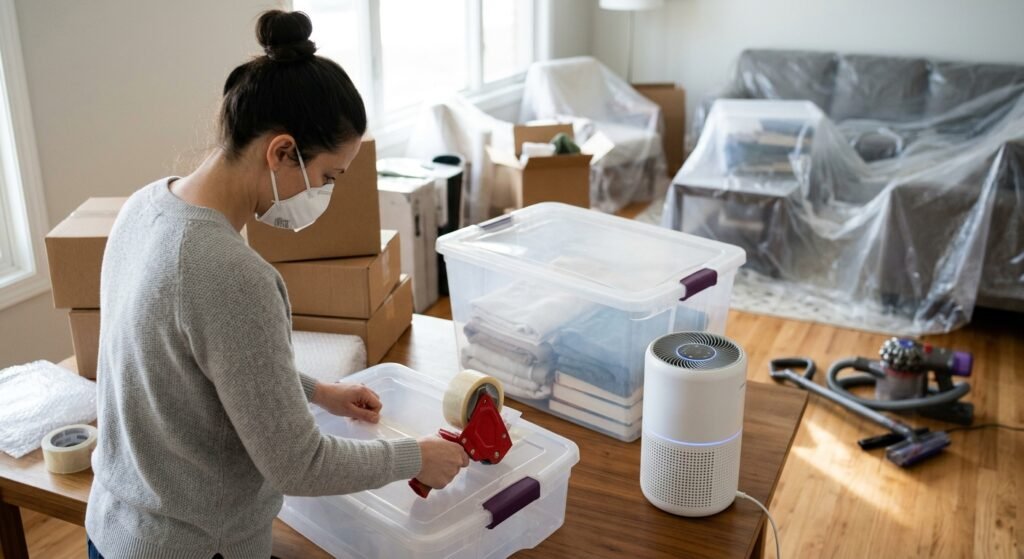
Local Move with Allergies/Asthma Considerations
Moving with allergies or asthma means the boxes matter as much as the address. Dust, mold spores, and packing debris stir up fast during a move, and that’s exactly when flare-ups hit hardest. I’ve seen it happen to families who did everything else right.
A local move already brings enough stress without an asthma attack in the middle of loading the truck. Skokie homes carry years of dust in closets, basements, and attics that nobody thinks about until moving day. Getting ahead of it protects your health and keeps the whole move on schedule.
I walk through why allergies and asthma need special planning, which packing materials actually help, how to prep your home before movers show up, what to do on moving day itself, and how to settle into your new place without triggering a reaction.
Why Allergies and Asthma Need Extra Planning on Moving Day
Moving stirs up years of settled dust, pet dander, and mold spores in a matter of hours. I’ve watched clients with mild seasonal allergies end up wheezing by lunchtime because nobody accounted for what gets kicked loose when furniture moves.
Asthma is a chronic respiratory condition that causes airway inflammation and breathing difficulty when triggered by irritants. That definition matters here because moving day creates a perfect storm of triggers all at once.
Cardboard boxes, especially used ones, carry dust and sometimes mold if they’ve sat in a damp garage. Old carpets and upholstered furniture release trapped allergens the moment they’re lifted or dragged. I always tell clients the real danger isn’t one trigger, it’s five of them hitting at the same time.
Common Triggers Hiding in Boxes and Moving Trucks
Used moving boxes are one of the worst offenders I run into. They sit in basements or storage units collecting mold spores, dust mites, and sometimes pest droppings nobody notices until the box gets opened.
Moving trucks themselves carry diesel fumes, enclosed-space dust, and sometimes mold if the truck hasn’t been properly ventilated between jobs. I ask clients with asthma to avoid riding in the cargo area and to keep truck doors open whenever the vehicle sits idle during loading.
Packing Materials That Reduce Allergen Exposure
The materials you pack with directly affect how much allergen exposure happens during the move. I steer clients toward new, clean materials every time asthma or allergies are a factor, even when it costs a little more upfront.
Plastic storage bins seal tighter than cardboard and resist moisture, which means less mold risk during transit or short-term storage. They also wipe down easily, something cardboard simply can’t do once it’s been handled.
Choosing Boxes, Tape, and Wrapping Supplies Wisely
New cardboard boxes beat used ones every time for anyone with respiratory sensitivities. Used boxes carry an unknown history, and I’ve opened plenty that smelled musty before a single item went inside.
Low-VOC packing tape and bubble wrap reduce chemical off-gassing compared to cheaper alternatives. Volatile organic compounds are chemical substances that evaporate at room temperature and can irritate airways with prolonged exposure. I recommend skipping heavily scented packing paper too, since fragrance is a documented asthma trigger for a large share of sufferers.
Preparing Your Home and Belongings Before Movers Arrive
Prep work before the moving truck shows up makes a bigger difference than almost anything done on moving day itself. I always push clients to start this at least a week out, not the night before.
Vacuuming with a HEPA-filter vacuum pulls dust and allergens out of carpets and upholstery before boxes ever get stacked nearby. A HEPA filter is a high-efficiency particulate air filter that captures at least 99.97% of airborne particles 0.3 microns in size. Running one through the house two or three days before the move cuts down significantly on what gets disturbed later.
Deep-Cleaning Furniture, Rugs, and Soft Items
Furniture and rugs trap allergens deep in their fibers, and moving them is exactly what releases that buildup into the air. I recommend a thorough vacuum and, where possible, a steam clean on upholstered pieces and area rugs before the move date.
Wash removable cushion covers, curtains, and bedding in hot water right before packing. The American Lung Association notes that washing bedding weekly in hot water significantly reduces dust mite populations, which matters even more when those items are about to be boxed up and sat in a truck.
What to Do on Moving Day to Protect Sensitive Lungs
Moving day itself demands a few deliberate habits to keep breathing easy. I tell every client with asthma to keep their rescue inhaler in a pocket, not packed in a box, no exceptions.
Open windows and doors whenever weather allows to keep air circulating through the house as boxes move in and out. Stale, closed-up air traps dust and fumes right where you’re breathing hardest while carrying boxes.
Managing Dust, Fumes, and Physical Exertion
Wearing a well-fitted N95 mask during the heaviest lifting and box-moving phases blocks a large share of airborne dust and particulates. I’ve had clients resist this at first and thank me by the afternoon once they feel the difference.
Pace the physical exertion too. Asthma attacks often get triggered by a combination of exertion and irritant exposure together, not either one alone, so building in breaks matters as much as the mask does.
Unpacking and Settling Into Your New Skokie Home Safely
The new house needs the same attention the old one did before anything gets unpacked. I always recommend a full clean of the new space, especially carpets and HVAC vents, before boxes start coming off the truck.
Unpack slowly, room by room, rather than ripping into every box at once. That pace keeps dust levels manageable and gives you a chance to notice if a specific box or item triggers symptoms.
Air Quality Checks for Your New Space
Check the HVAC filter in the new home before running the system for the first time. A clogged or old filter recirculates whatever dust and allergens were left behind by the previous occupants straight through the house.
Consider a portable air purifier with a HEPA filter for the bedroom during the first few weeks. The Asthma and Allergy Foundation of America points out that reducing indoor particulate exposure during environmental transitions helps lower flare-up frequency, which lines up with exactly what a move represents.
Conclusion
Moving with allergies or asthma takes extra planning, but it doesn’t have to derail your relocation. Clean materials, home prep, and moving-day precautions protect your lungs from avoidable triggers.
Skokie homes carry years of dust and allergens that surface the moment belongings start moving. A little preparation now prevents a miserable moving day later.
We handle local moves with care for clients managing allergies and asthma every day. Reach out to ASHER MOVERS LOCAL & LONG DISTANCE and we’ll help you plan a move that keeps your health front and center.
Frequently Asked Questions
Can movers accommodate clients with severe asthma or allergies?
Yes, movers can accommodate these needs with advance notice about your sensitivities. I recommend telling your moving company ahead of time so they can plan ventilation and handling accordingly.
Should I use new or used moving boxes if I have allergies?
New boxes are the safer choice for anyone with allergies or asthma. Used boxes often carry mold, dust, or pest residue that can trigger symptoms during packing and unpacking.
What packing materials should I avoid with asthma?
Avoid scented packing paper, high-VOC tape, and foam peanuts that shed small particles. Low-VOC tape and plain bubble wrap are safer alternatives that reduce airway irritation.
How early should I start cleaning before a move?
Start deep-cleaning carpets, furniture, and bedding about a week before moving day. This gives disturbed dust and allergens time to settle before the heavy lifting begins.
Is it safe to ride in a moving truck with asthma?
Riding in the cargo area isn’t recommended due to dust, diesel fumes, and limited ventilation. I advise clients to travel separately and keep truck doors open during loading whenever possible.
What should I check in my new home before unpacking?
Check and replace the HVAC filter, and clean carpets and vents before boxes come inside. A fresh filter and clean surfaces prevent old allergens from circulating through your new space.
