
Moving with a mobility-impaired family member takes more planning than a typical relocation, but it doesn’t have to be stressful. I’ve seen families get this right by starting early, packing medical equipment with care, and choosing movers who actually understand accessibility needs.
A rushed move puts both safety and comfort at risk for a family member with limited mobility. Doorways, stairs, and unfamiliar layouts create real obstacles on moving day. Getting ahead of these issues protects your loved one and keeps the whole move on schedule.
This guide walks through building a mobility-friendly timeline, packing medical equipment and mobility aids safely, preparing an accessible home before and after the move, and choosing a moving company that knows how to handle these needs. I also cover the common delays families run into and how to sidestep them.
Planning a Mobility-Friendly Moving Timeline
A move with a mobility-impaired family member starts weeks earlier than a standard move. I always tell families to build in extra time for medical appointments, equipment transport logistics, and a slower packing pace near the move date.
Scheduling Around Medical and Accessibility Needs
The moving date needs to work around medical appointments, therapy sessions, and medication refills. I map out the week before and after the move and avoid scheduling anything medical during the actual transition. That buffer prevents a missed appointment from colliding with moving-day chaos.
Transportation for the family member matters just as much as the truck schedule. A mobility-impaired person often needs a separate, more comfortable ride than the moving crew’s vehicle. Plan that ride days in advance, not the morning of.
Coordinating With Caregivers and Movers in Advance
Caregivers and movers need to be on the same page before the truck ever arrives. I walk the moving company through the family member’s specific needs: equipment that can’t be boxed, items that need to stay accessible until the last minute, and any physical limitations the crew should know about.
A quick call a week out solves most surprises. The moving company can flag stairs, narrow hallways, or tight parking that affects wheelchair or stretcher access at either address.
Packing Mobility Equipment and Medical Supplies Safely
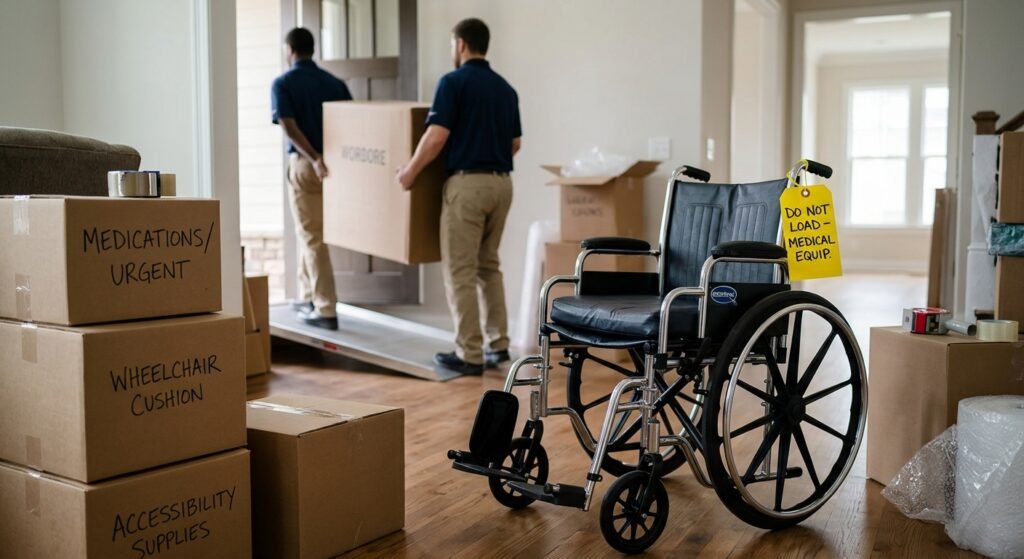
Mobility aids and medical equipment need separate handling from the rest of the household. I pack these items last and load them first, so they’re the first things off the truck at the new home.
Wheelchairs, Walkers, and Mobility Aids
A wheelchair is a mobility device that assists a person with limited or no ability to walk through manual or powered movement. I never let movers pack a wheelchair, walker, or scooter into a box with other items. These stay in their own clearly labeled space and travel upright whenever the design allows it.
Battery-powered mobility devices need special attention. Movers often require the battery disconnected or secured separately to prevent damage during transport. I confirm this with the moving company before the truck is loaded, not on moving day.
Small parts matter too. Footrests, cushions, and removable arms get labeled and bagged together so nothing goes missing in transit.
Medications and Medical Devices
Medications and critical medical devices never go on the moving truck. I pack these in a bag that travels with the family member directly, not with the household goods. A missed dose or a lost device during a multi-hour move creates a real medical risk.
Oxygen concentrators, CPAP machines, and similar equipment need padded, upright transport. I keep these in their original cases when possible, since manufacturers design that packaging specifically for safe movement.
A short list of essentials — medications, chargers, medical ID, and a few days of supplies — stays in a bag that never leaves sight during the move.
Preparing an Accessible Home Before and After the Move
Both the old home and the new one need a walkthrough focused purely on accessibility before moving day arrives. I look at door widths, step-free paths, and bathroom access at the new address well before the truck shows up.
Ramps, Doorways, and Furniture Placement
A temporary ramp solves most entryway problems at move-in. I recommend confirming ramp placement with the moving company in advance, since the crew needs that path clear for carrying furniture too.
Furniture placement in the new home should follow the family member’s mobility path, not just design preference. I plan walkways at least three feet wide between major pieces, matching standard wheelchair accessibility guidelines.
Bathroom and bedroom access takes priority on move-in day. Movers can place grab bars, shower chairs, and bed rails first, before the rest of the unpacking begins.
Choosing Movers Experienced With Mobility-Impaired Families
Not every moving company handles mobility equipment and accessibility needs the same way. I always recommend asking directly about this experience before booking, rather than assuming a general mover can handle it.
Questions to Ask a Moving Company
A few direct questions reveal a lot. Has the crew moved mobility equipment before? Do they have experience with narrow doorways, stair-heavy homes, or tight building access? Can they guarantee a specific time window so transportation for the family member lines up with the truck?
Insurance coverage for medical equipment deserves its own question. Standard moving insurance doesn’t always cover specialized mobility devices at full replacement value, so I confirm this detail before move day, not after something breaks.
ASHER MOVERS LOCAL & LONG DISTANCE trains crews specifically on handling mobility equipment and coordinating around medical schedules, which removes a lot of guesswork for families in this situation.
Avoiding Common Delays and Safety Issues on Moving Day
Most moving-day delays for families with a mobility-impaired member come down to the same few causes. Narrow hallways that weren’t measured ahead of time top the list, along with elevators that need reservation slots in apartment buildings.
Weather plays a bigger role too. Rain or ice on a temporary ramp turns a minor inconvenience into a real fall risk, so I check the forecast and have a backup plan — tarps, extra mats, or a rescheduled time — ready to go.
Clear labeling prevents the single biggest headache: movers accidentally loading a needed mobility aid or medical device onto the truck before it’s needed. A bright label or a “do not load” sign solves this in seconds.
Conclusion
A move with a mobility-impaired family member comes down to timing, careful equipment handling, and an accessible layout on both ends. Planning each piece ahead protects comfort and safety on a day that already carries enough stress.
Families who prepare medical transport, label equipment clearly, and walk through accessibility needs with their movers avoid the delays that catch others off guard. The right preparation turns a complicated move into a manageable one.
We at ASHER MOVERS LOCAL & LONG DISTANCE train our crews to handle mobility equipment with care and coordinate around medical schedules. Reach out to us and let’s plan a move that puts your family member’s safety and comfort first.
Frequently Asked Questions
Can movers transport a wheelchair or walker?
Yes, movers transport wheelchairs and walkers, but these items need separate handling from boxed belongings. I always pack them last, load them first, and keep removable parts labeled together.
Should medications travel with the moving truck?
No, medications should never travel on the moving truck. I pack these directly with the family member to avoid delays, temperature issues, or loss during transport.
How early should I start planning a move with a mobility-impaired family member?
I recommend starting at least four to six weeks ahead. That gives enough time to schedule medical appointments, confirm accessibility at the new home, and brief the moving crew.
What should I ask a moving company about accessibility experience?
Ask whether the crew has handled mobility equipment before, how they manage narrow doorways or stairs, and whether they guarantee a specific arrival window. ASHER MOVERS LOCAL & LONG DISTANCE answers these questions directly during booking.
Do movers charge extra for handling medical equipment?
Some movers charge extra for specialized handling of medical equipment, depending on size and fragility. I confirm this detail during the quote process so there are no surprises on moving day.
What’s the biggest cause of delays when moving a mobility-impaired family member?
Unmeasured doorways, hallways, and elevator access cause most delays. A pre-move walkthrough at both addresses prevents this from derailing the schedule.
Should mobility equipment be insured separately during a move?
Yes, I recommend checking whether standard moving insurance covers specialized mobility devices at full value. Separate coverage protects against gaps in a standard policy.
