
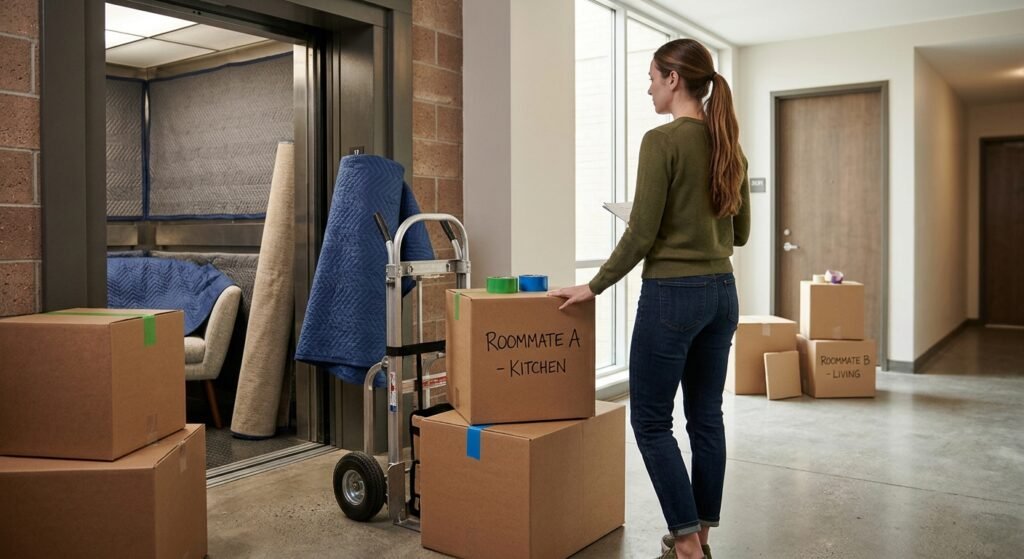
I’ve worked enough short-distance moves to know the short ones trip people up more than the long ones. A move between roommates in the same building or just down the block in Skokie, IL looks easy on paper, and that’s exactly where people get caught off guard.
Skip the planning and you’re stuck mid-move with a blocked elevator or a missing certificate of insurance. None of that is rare. I see it on short moves more than long ones, honestly.
I’ll walk through what actually changes when the move is this short, from building rules and insurance paperwork to how movers price a job that barely crosses the parking lot, and how to split a shared household without starting a fight over who gets the couch.
Why Moving Between Units Still Needs a Real Plan
People assume a move down the hall or across the block doesn’t need the same prep as a cross-town job. That assumption costs time on moving day, every time.
A short-distance move is a move. The truck still has to load, drive, park, and unload, and every one of those steps takes real time regardless of how close the two addresses sit.
Short Distance Doesn’t Mean Simple Logistics
I treat a same-building move with the same checklist as any other local job. Parking, access points, and timing windows still have to line up on both ends.
Two units in the same building often share one loading dock or one freight elevator. That means timing matters more here, not less, because both moves are competing for the same access point.
What a Roommate-to-Roommate Move Actually Involves
Splitting one household into two addresses is different from a standard move. Two people are untangling shared purchases, shared furniture, and shared responsibility for the condition of a space.
This kind of move usually means two destinations, two inventories, and one shared starting point. I always recommend sorting ownership before the truck arrives, not during loading.
Splitting Shared Furniture and Belongings
Couches, shared kitchen items, and jointly bought furniture need an owner assigned before moving day. Waiting until the crew arrives to decide who keeps what slows the whole job down.
I ask roommates to walk through the space together beforehand and mark items by destination. A sticky note system works fine. Color-coded tape works better.
Building Rules and Elevator Reservations You Can’t Skip
Property managers in multi-unit buildings almost always have move-in and move-out policies, and those policies apply even when the move is internal. Skipping this step is the single most common cause of delay I see on short local jobs.
Most buildings require advance notice, a reserved time window, and proof of insurance before movers are allowed to use shared elevators or loading areas.
Certificates of Insurance for Property Management
A certificate of insurance, often called a COI, is a document a moving company provides that verifies liability coverage for the building. Property managers request this before granting elevator or loading dock access, and without it, a crew can get turned away on arrival.
I always confirm the COI requirement with the building office days ahead, not the morning of. Buildings process these requests slowly, and a same-day request usually doesn’t make the deadline.
How Movers Price a Same-Building or Same-Block Move
Local movers typically price by the hour, and short-distance jobs often run into minimum hour requirements that surprise people expecting a lower bill for a shorter trip.
A move that takes fifteen minutes to drive can still bill for three or four hours once loading, elevator waits, and unloading get factored in.
Hourly Minimums on Short-Distance Jobs
Most local moving companies set a two- to four-hour minimum regardless of distance. That minimum covers crew time, truck prep, and the reality that loading and unloading take the bulk of the hours on any job, long or short.
I tell clients to budget for the minimum rather than the drive time. The drive is rarely where the hours go.
Avoiding Damage and Disputes When Splitting a Household
Splitting a shared space introduces a specific risk: disagreements over who caused existing damage versus new damage from the move itself. This matters more in a roommate split than in a standard single-household move.
I recommend both parties document the unit’s condition together before the crew arrives, so there’s a shared record instead of two conflicting memories after the fact.
Documenting Condition Before and After
Photos and a short written walkthrough, dated and shared between both roommates, remove most of the ambiguity. This single step prevents the majority of post-move disputes I’ve seen over security deposits and shared damage claims.
I keep this simple: timestamped photos of every room, sent to both parties, before the first box moves.
Conclusion
A roommate split inside the same building or block still needs real planning, from building paperwork to honest conversations about shared furniture. Skipping prep is what turns a short move into a long day.
Building rules, insurance requirements, and hourly minimums apply regardless of distance. Treating the move casually is where most delays start.
We’ve handled enough of these splits to know where they go wrong. Reach out to ASHER MOVERS LOCAL & LONG DISTANCE and we’ll walk you through the building requirements and pricing before moving day arrives.
Frequently Asked Questions
Is it worth hiring movers for a move between units in the same building?
Yes, because shared elevators, hallways, and loading docks create timing conflicts that are easier to manage with a trained crew. A short distance doesn’t reduce the physical effort of carrying furniture and boxes.
Do I need a certificate of insurance for an in-building move?
Most property managers require a COI before granting elevator or loading dock access, even for internal moves. I always request this from the moving company at least a week ahead.
How do movers charge for a move that’s just down the block?
Local movers typically bill hourly with a two- to four-hour minimum, regardless of how short the drive is. Loading and unloading time, not distance, drives most of the cost.
How do roommates fairly split shared furniture during a move?
I recommend walking through the space together before moving day and assigning ownership item by item. A simple tagging system prevents last-minute disputes during loading.
What should roommates do to avoid damage disputes after splitting a unit?
Document the unit’s condition with dated, timestamped photos before the crew arrives, and share them between both parties. This creates a clear record that prevents disagreements over security deposits later.
