
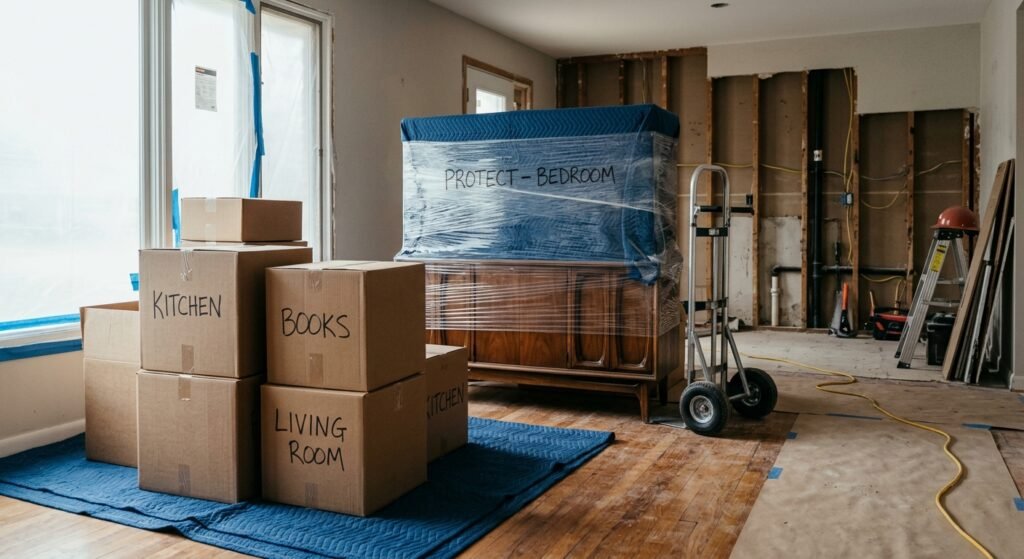
I’ve worked with enough families timing a move around a renovation to know the timing question causes more stress than the move itself. Moving before renovation gives contractors a clear, empty space to work faster and with fewer restrictions. Moving after means living around dust and noise a little longer, but you unpack once instead of twice.
Skokie homes with tight driveways and older layouts make this decision even more important. A move scheduled around the wrong renovation phase adds delays, extra costs, and real risk to your furniture and floors.
I walk through how to decide on timing, which items need special handling, how to coordinate movers with your contractor’s schedule, where storage fits into the process, and what the final walkthrough looks like before you call the space done.
Deciding Whether to Move Before or After Your Renovation
The renovation scope decides the move timing more than anything else. A kitchen gut job with dust everywhere pushes most people toward moving out first. A bathroom refresh or new flooring in one room rarely justifies relocating the whole household.
I look at three things with every client: the size of the renovation, the number of rooms affected, and whether the home stays livable during the work. Those three answers make the timing decision almost automatic.
Signs You Should Move Out Before Work Starts
Structural work, full kitchen remodels, and whole-house flooring replacements are the clearest signals to move out first. Dust from drywall and sanding settles into fabric, electronics, and HVAC systems fast. A renovation touching more than two rooms at once usually means the home isn’t safely livable during construction.
Water and electrical shutoffs during the work are another red flag. No working kitchen or bathroom for more than a few days turns a renovation into a camping trip nobody signed up for.
When Staying Put Until After Renovation Makes Sense
Smaller single-room projects rarely require moving out at all. Painting, cabinet swaps, and flooring in one area let a household function normally with some inconvenience. Staying through the renovation also means unpacking exactly once, into a finished space, instead of twice.
I recommend this path when the renovation has a firm end date and the contractor confirms the home stays functional throughout. A vague timeline changes that calculation completely.
Protecting Your Belongings During a Renovation-Timed Move
Packing for a renovation-timed move isn’t the same as packing for a standard move. Dust, debris, and active construction change what needs extra protection and what needs to leave the property entirely before work begins.
I treat finished furniture, electronics, and anything fabric-covered as high priority for wrapping and sealing, regardless of which direction the move goes. Items exposed to construction dust for even a few days often need professional cleaning afterward.
Packing Fragile and Finished Items Correctly
Finished wood furniture gets moving blankets and stretch wrap before anything else goes into a box. Glass tabletops, mirrors, and artwork travel flat whenever the truck layout allows it, never leaned against a wall.
Electronics need their original boxes when possible, or a box with at least two inches of cushioning on every side. I separate cables and small components into labeled bags taped directly to the item they belong to, so nothing gets lost in the shuffle.
Items Movers Cannot Transport During Renovation Moves
Paint, solvents, and adhesives left over from a prior project count as hazardous materials and movers can’t legally load them onto a truck. Propane tanks, aerosol cans, and construction chemicals fall into that same category. The U.S. Department of Transportation classifies many common renovation supplies as regulated hazardous materials for interstate transport.
Flammable liquids like thinner and stain also stay off the truck, along with anything in an unlabeled container. I tell every client to plan for separate disposal or personal transport of these items well before moving day arrives.
Coordinating Moving Day Around Contractor Schedules
A moving truck and a dumpster delivery arriving at the same time turns a driveway into a standoff. I always get the contractor’s schedule in writing before confirming a moving date, specifically checking for material deliveries, demo days, and inspection appointments.
Shared elevators, narrow hallways, and single-driveway access in older Skokie homes make this coordination even more critical. Two crews competing for the same entry point costs everyone time.
Avoiding Overlap Between Movers and Renovation Crews
I block out a two-hour buffer between the last contractor activity and the first moving truck arrival whenever the schedules sit close together. That buffer absorbs the inevitable delays that come from both industries.
Clear pathways matter just as much as timing. Renovation debris, tools, and materials staged in hallways or doorways slow down loading and raise the chance of damage to both the furniture and the finished work.
Storage Solutions for Mid-Renovation Moves
Some renovations genuinely require a move but leave no real destination for the belongings yet. Storage fills that gap, and the right choice depends entirely on how long the renovation timeline actually runs.
I treat storage decisions as a cost comparison first. A short gap favors flexibility, while a longer renovation timeline favors committing to one unit and avoiding repeated transfer fees.
Short-Term vs Long-Term Storage in Skokie, IL
A renovation finishing within four to six weeks works fine with portable storage containers delivered to the curb. Longer renovations, especially full gut jobs running past two months, justify a traditional storage unit with climate control for furniture and electronics.
Climate control matters more than most people expect here. Skokie’s humidity swings between seasons can warp wood furniture and damage electronics sitting in an uncontrolled unit for months at a time.
Settling Back In After Renovation Is Complete
Moving back in after renovation goes faster when the walkthrough happens before the truck arrives, not after. I always schedule a final inspection with the contractor first to confirm the space is genuinely ready for furniture and boxes.
Floors need full cure time before heavy furniture touches them again. Pushing a move-in date ahead of a flooring manufacturer’s cure window risks dents, scratches, and voided warranties.
Final Walkthrough Checklist Before Move-In Day
I walk every room checking for finished paint, functioning outlets, and completed trim work before confirming the move-in date with the crew. A punch list item left unresolved gets harder to fix once furniture fills the room.
HVAC systems need a final filter change too. Construction dust clogs filters fast, and running a system with a dirty filter right as furniture and belongings move back in just reintroduces the dust problem you spent weeks avoiding.
Conclusion
Timing a move around a renovation comes down to scope, schedule, and protecting what matters most to your household. We’ve guided Skokie families through both directions of this process, from early packing decisions to the final walkthrough.
A renovation timeline shifts constantly, and a moving plan needs room to shift with it. Give yourself a buffer on both ends rather than a fixed date carved in stone.
Asher Movers Local & Long Distance coordinates directly with your contractor’s schedule to keep your move on track. Call us to plan a move that works around your renovation, not against it.
Frequently Asked Questions
Can movers pack items still covered in construction dust?
Dust-covered items get wiped down before packing whenever possible. Heavy dust buildup on upholstery or electronics often needs professional cleaning first to avoid damage during transport.
How far in advance should I book movers around a renovation?
I recommend booking three to four weeks ahead once the contractor confirms a realistic completion date. Renovation timelines shift often, so flexible scheduling with the moving company matters more than an exact date.
Do movers handle paint cans and leftover renovation materials?
Movers cannot transport paint, solvents, or other flammable renovation materials under federal hazardous materials regulations. Plan to dispose of these items separately or transport them yourself in a well-ventilated vehicle.
Is it cheaper to move once or twice during a renovation?
Moving once directly into the finished space almost always costs less than moving out and back in separately. Two moves double the loading, transport, and potential storage fees.
What size storage unit fits a typical three-bedroom home during renovation?
A three-bedroom home typically needs a 10×15 or 10×20 storage unit depending on furniture volume. I recommend climate-controlled units for any renovation stretching longer than six weeks.
How do I protect hardwood floors on move-in day after refinishing?
Hardwood floors need full cure time, often two to four weeks depending on the finish, before heavy furniture touches the surface. Felt pads under furniture legs and clear walking paths protect the finish during the actual move-in.
