
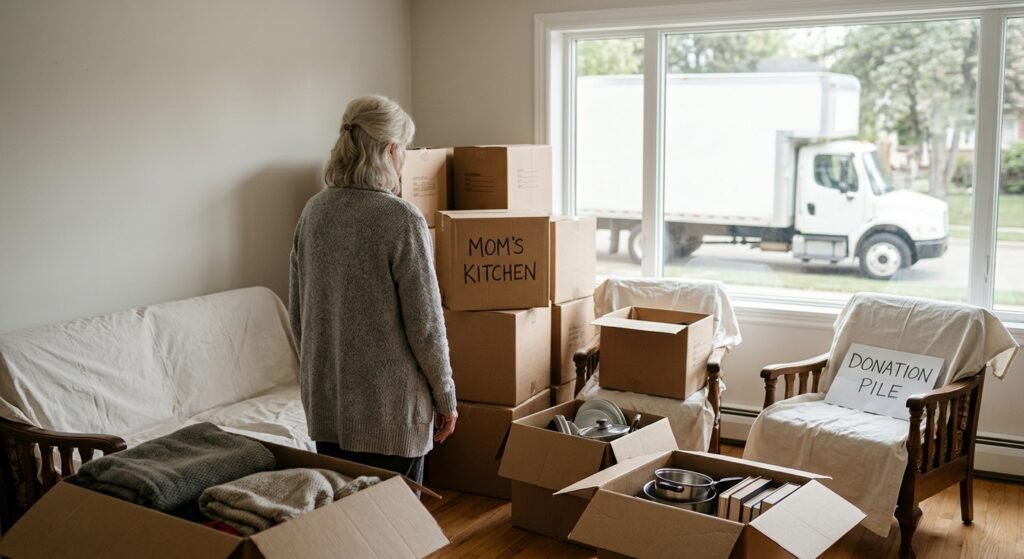
Losing a parent or spouse brings a moving task nobody wants to face, and the home still holds everything they left behind. I walk families through estate moves regularly, and the hardest part is rarely the boxes. It’s deciding what to do with a lifetime of belongings while grief is still fresh.
An estate move happens on a deadline you didn’t choose, often tied to a lease, a sale, or a probate court date. Families in Skokie face this every month, usually while juggling funeral arrangements and paperwork. There’s no script for this kind of move, but there is a clear process.
I’ll walk through what an estate move actually involves, how to sort and prepare belongings with care, which items a moving company can’t legally transport, how timing and family dynamics factor in, and what to look for in a local mover who handles this situation well.
What an Estate Move Involves After a Death in the Family
An estate move is the relocation or distribution of a deceased person’s belongings, typically coordinated by family members, an executor, or an estate attorney. It differs from a standard move because the person packing up the home usually isn’t the person who lived there.
I see this most often with adult children clearing out a parent’s house, or a surviving spouse downsizing out of a home that’s suddenly too big and too quiet. The emotional weight changes the pace of everything. Decisions take longer. Breaks happen more often. That’s normal, and a good moving company plans around it instead of rushing the family through.
Who Typically Coordinates the Move
The estate executor usually makes the final call on logistics, even when multiple family members are involved. Sometimes it’s a sibling, sometimes a hired estate attorney, sometimes the surviving spouse handling it alone. Whoever holds that role needs authority to make binding decisions with the moving company.
How This Differs From a Standard Residential Move
A standard move has one household making its own choices about its own stuff. An estate move involves someone else’s possessions, often decades of accumulated items, and frequently a compressed timeline tied to a lease end date or a home sale closing.
Sorting and Preparing a Loved One’s Belongings Before Moving Day
Sorting a loved one’s home takes longer than packing a typical household, and rushing it leads to regret. I tell families to start with a simple four-category system before a single box gets taped shut. It keeps decisions manageable instead of overwhelming.
Separating Items for Keep, Donate, Sell, and Discard
Four clear piles make the entire process faster: keep, donate, sell, and discard. Furniture in good condition often goes to donation centers, while personal items split based on what family members actually want. Estate sale companies can handle the “sell” pile separately if the volume is large.
Handling Sentimental and Fragile Items With Care
Photo albums, jewelry, and handwritten letters deserve separate, careful packing away from general household boxes. I recommend families pack these personally rather than leaving them to movers, not because movers aren’t careful, but because sorting sentimental items is a personal process that takes its own time. Label these boxes clearly so nothing sentimental gets mixed in with donation boxes by accident.
Items Movers Cannot Transport From an Estate
Every moving company operates under transportation regulations that restrict certain items, and estate moves often surface these items because homes accumulate things over decades. Knowing this list before moving day prevents delays and awkward surprises when the truck arrives.
Hazardous and Restricted Household Items
Movers cannot legally transport propane tanks, old paint cans, cleaning chemicals, fireworks, ammunition, or car batteries. Older homes frequently hold decades-old hazardous materials in garages and basements that the family hasn’t touched in years. The U.S. Environmental Protection Agency outlines proper disposal methods for household hazardous waste, and most municipalities run scheduled collection events for exactly this situation.
Legal Documents, Valuables, and Personal Records
Wills, deeds, financial records, cash, and jewelry should travel with a family member directly, never in the moving truck. This matters even more in an estate situation, since these documents often carry legal weight for probate proceedings. I always tell families to create a “with me” bag before movers ever touch a single box, separate from everything else in the house.
Coordinating Logistics, Timing, and Family Decisions
Estate moves rarely run on a timeline the family controls, and that pressure changes how the whole move gets planned. A lease deadline, a home sale closing, or a probate requirement often sets the date, not personal readiness.
Working Around Probate and Estate Settlement Timelines
Illinois probate proceedings can take months, and the property sometimes needs to be vacated before the estate fully settles. I recommend confirming with the estate attorney exactly which dates are flexible and which are fixed before booking a move date. That single conversation prevents most of the scheduling stress families run into later.
Managing Multiple Family Members’ Input
Siblings and relatives don’t always agree on what stays, what goes, or who gets what. Setting a decision deadline ahead of moving day keeps disagreements from stalling the entire process. One person holding final say, usually the executor, keeps the move on schedule even when opinions differ.
Working With a Local Moving Company in Skokie, IL
A local mover familiar with estate situations handles the logistics differently than a standard residential crew. Skokie families benefit from working with a company that understands probate timelines, donation logistics, and the slower pace these moves often require.
Questions to Ask Before Booking an Estate Move
Ask whether the company offers flexible scheduling for court or lease deadlines, and whether they coordinate with estate sale companies or donation pickups. Confirm how they handle valuables and sentimental items during the move. A mover who’s done this before will have clear answers instead of generic ones.
How Asher Movers Supports Families Through This Process
We handle estate moves across Skokie with the patience and flexibility these situations call for. Our crews know how to work around probate timelines, coordinate with estate sale and donation services, and treat a family’s belongings with the respect they deserve.
Conclusion
Estate moves carry logistical demands and emotional weight that standard moves don’t involve. Sorting, timing, and prohibited items all shape how smoothly the process unfolds for a grieving family.
Getting these details right prevents delays and protects what matters most during an already difficult time. A local mover experienced with estate situations makes a real difference in how manageable this becomes.
We’re here to help Skokie families through this exact process. Reach out to Asher Movers Local & Long Distance when you’re ready to plan your estate move with care.
Frequently Asked Questions
How long does an estate move usually take to plan?
Most estate moves take two to six weeks to plan properly, depending on the home’s size and family decisions. Larger estates with years of accumulated belongings need more sorting time upfront.
Can movers help coordinate donation pickups for estate items?
Many moving companies coordinate directly with local donation centers to simplify the process. Ask your mover during booking whether this service is included or arranged separately.
What happens to items family members can’t agree on?
Setting a decision deadline before moving day prevents disputes from delaying the move. The estate executor typically holds final authority when family members can’t reach agreement.
Do I need a lawyer present on moving day?
A lawyer doesn’t need to be present, but legal documents should be secured separately beforehand. Confirm with your estate attorney which paperwork needs to stay accessible during the move.
Are there special costs associated with estate moves?
Estate moves can cost more than standard moves due to sorting time, donation coordination, and sometimes storage needs. Getting a detailed quote upfront helps avoid surprises on the final bill.
What should I do with hazardous materials found in the home?
Hazardous materials need separate disposal through a municipal collection program, not the moving truck. Check your local municipality’s website for scheduled household hazardous waste collection dates.
