
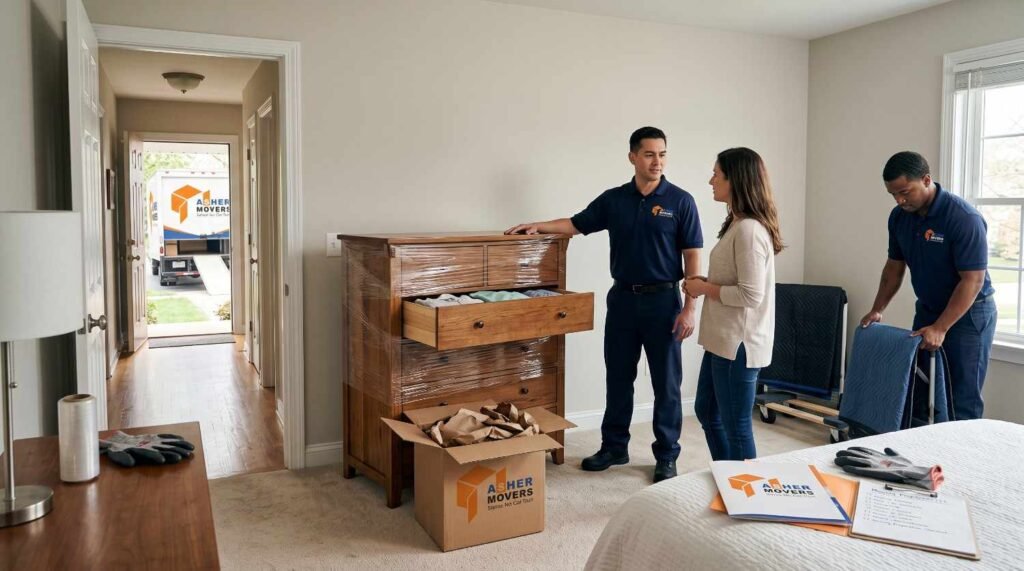
Most movers recommend emptying dresser drawers before a move but the honest answer is that it depends on the type of move, the furniture, and what’s inside. Getting this wrong adds weight, risks damage, and can slow your whole moving day down.
Knowing the rules ahead of time saves you from scrambling on moving day. It protects your furniture, your belongings, and your movers.
This guide covers when to empty drawers, when leaving them full is fine, how to prepare them correctly, and what professional movers in Skokie, IL expect when they arrive.
The Short Answer And Why It Depends on the Move
The default advice from most professional moving companies is to empty your drawers. But that rule has real exceptions, and understanding them makes your move faster and safer.
The two biggest factors are distance and who is doing the moving. A short local move with a lightweight dresser plays by different rules than a cross-country relocation with a heavy hardwood chest.
Local Moves vs. Long-Distance Moves
On a local move, the furniture spends less time in transit and faces fewer bumps, turns, and vibrations. That shorter ride means a lightly loaded dresser has a reasonable chance of arriving intact.
Long-distance moves are a different story. Hours of highway driving, loading dock transfers, and temperature changes all put stress on furniture joints. Contents shift, drawers pop open, and the added weight strains the frame.
For anything crossing state lines or traveling more than a few hours, I always recommend emptying every drawer completely.
Professional Movers vs. DIY Moving
Professional movers carry the equipment and training to handle furniture safely moving straps, furniture dollies, and padding blankets. They also carry liability, which means they have a direct interest in how your furniture is loaded.
When you rent a truck and move yourself, you control the packing and the driving. That flexibility is also the risk. Without professional equipment and technique, a full dresser becomes a back injury and a broken drawer waiting to happen.
When You Should Empty Drawers Before Moving
There are situations where emptying drawers is not optional it is the only safe approach. Knowing these scenarios ahead of time keeps your furniture and your movers protected.
Heavy Furniture and Structural Risk
Large hardwood dressers, antique armoires, and solid wood chests are already heavy before you add a single item. Leaving drawers full in these pieces pushes the total weight into a range that strains joints, warps frames, and makes safe maneuvering nearly impossible.
Furniture is designed to hold weight from above not to be carried sideways while loaded. The structural stress of a full dresser being tilted, lifted, and navigated through doorways is completely different from normal use.
Empty the drawers. The furniture moves safer, and so does the crew carrying it.
Long-Distance and Cross-Country Relocations
I mentioned this above, but it deserves its own section because the risks compound over distance. Contents shift during transit and create uneven weight distribution inside the drawer. That shifting puts lateral pressure on drawer slides and frame joints that were never designed to absorb it.
By the time a fully loaded dresser arrives after a 1,000-mile haul, the drawers may stick, the frame may rack, and the contents may be damaged from being jostled for hours.
Pack the contents into boxes. Label them by drawer. Reassembly at the destination takes ten minutes.
Items That Cannot Travel Inside Drawers
Certain items should never travel inside furniture drawers regardless of move distance. This is not a preference it is a safety and liability issue.
Items that must be removed from drawers before any move:
- Liquids of any kind perfume, lotion, cleaning products, nail polish
- Hazardous or flammable materials lighters, aerosols, batteries in bulk
- Fragile or breakable items glass bottles, ceramic keepsakes, mirrors
- Valuables jewelry, cash, important documents, medications
- Food items anything perishable or in unsealed containers
Most professional moving companies will not accept liability for damage to items left inside furniture. Removing these items protects both your belongings and your claim rights.
When Leaving Drawers Full Is Acceptable
Emptying every drawer in your home is time-consuming. For certain situations, leaving drawers full is a reasonable and practical choice as long as you do it correctly.
Lightweight Dressers on Short Local Moves
A small bedroom dresser filled with soft clothing is a manageable load on a short local move. Clothes are lightweight, they do not shift dangerously, and they cushion the drawer interior during transit.
The key word is lightweight. If you can lift the dresser yourself without straining, it is probably in the acceptable range. If it takes two people just to slide it across the floor, empty it.
This is the one scenario where leaving drawers full genuinely saves time without creating meaningful risk.
What Movers Typically Allow
Most professional movers leave the final call to the customer but they will flag furniture they consider unsafe to move fully loaded. If a mover tells you a piece needs to be emptied, that assessment comes from experience and liability awareness.
Some companies have written policies requiring empty drawers on all furniture. Others evaluate piece by piece. Ask your moving company directly before moving day so there are no surprises when the crew arrives.
How to Prepare Drawers the Right Way
Whether you empty the drawers or leave some contents in place, preparation matters. A few simple steps protect your furniture and make unpacking faster.
Packing Drawer Contents Safely
Remove drawer contents and pack them into clearly labeled boxes. Use packing paper to wrap anything fragile. Keep drawer contents together by room and by piece “Master Bedroom Dresser, Top Drawer” is a label that saves real time on the other end.
Soft items like clothing can go directly into boxes or wardrobe boxes without wrapping. Heavier or mixed items need individual wrapping to prevent shifting and breakage.
Securing Drawers That Stay In
If a drawer stays in the furniture during the move, it needs to be secured so it cannot slide open. An open drawer mid-carry is a serious injury risk for the movers and a damage risk for the furniture.
Stretch wrap is the cleanest solution wrap the entire piece two or three times to hold all drawers closed. Painter’s tape works on painted or finished surfaces where stretch wrap is not practical. Never use packing tape directly on wood or finished surfaces.
Labeling and Organization Tips
Label every box with the room destination and the piece it came from. This is especially useful for dresser organization strategies when you have multiple dressers going to different rooms.
Color-coded labels by room cut unpacking time significantly. A simple system one color per room, applied to both the box and the doorframe at the destination means movers place boxes in the right rooms without asking.
What Movers in Skokie, IL Expect on Moving Day
Moving day runs smoothly when the crew arrives to a prepared home. In Skokie, IL, where moves range from compact apartment relocations to full single-family home moves, preparation directly affects how long the job takes and how much it costs.
Movers expect drawers to be either emptied and packed or secured and clearly communicated. Surprises a fully loaded armoire nobody mentioned, drawers that pop open mid-carry slow the job and create risk.
The more you communicate with your moving company before the day, the better the outcome. Confirm their drawer policy, flag any oversized or unusually heavy pieces, and have everything accessible when the crew arrives.
How ASHER MOVERS LOCAL & LONG DISTANCE Handles Furniture With Drawers
At ASHER MOVERS LOCAL & LONG DISTANCE, we assess each piece of furniture individually. Our crew evaluates weight, construction, and move distance before deciding how a piece gets handled.
We use professional-grade stretch wrap, furniture pads, and moving straps on every job. For long-distance moves out of Skokie, we require drawers to be emptied on all heavy furniture and we will tell you that clearly during the booking process, not on moving day.
Our goal is simple: your furniture arrives the way it left. That means we take the extra steps, ask the right questions, and handle your belongings the way we would handle our own.
Conclusion
Drawer preparation is one of those moving details that seems minor until it causes a problem. The right approach depends on your furniture, your move distance, and your moving company’s requirements.
Empty heavy pieces, secure everything that stays in, and remove anything fragile, liquid, or valuable before the crew arrives. Those three steps cover most of the risk.
At ASHER MOVERS LOCAL & LONG DISTANCE, we make this easy. Contact us before your Skokie move and we will walk you through exactly how to prepare so moving day goes the way it should.
Frequently Asked Questions
Do movers empty drawers before moving?
No movers do not empty drawers for you. That preparation is the customer’s responsibility before the crew arrives. Some companies will flag furniture they consider unsafe to move fully loaded, but the packing work is yours.
Can you leave clothes in dresser drawers when moving?
Yes, in most cases on short local moves. Soft clothing is lightweight and does not shift dangerously. For long-distance moves, I recommend packing clothing into boxes and emptying the dresser completely to protect the furniture frame.
Will movers move a dresser with stuff in it?
Most movers will attempt it on lightweight pieces for local moves, but many have policies against it for heavy furniture or long-distance relocations. Always confirm with your moving company before moving day to avoid delays.
How do you secure dresser drawers for moving?
Stretch wrap is the most effective method wrap the entire dresser two to three times to hold all drawers closed. Painter’s tape works on finished surfaces where stretch wrap is not practical. Never apply packing tape directly to wood or painted finishes.
What items should never stay in drawers during a move?
Liquids, flammable materials, fragile items, valuables, medications, and food should always be removed from drawers before any move. These items create safety risks and are typically excluded from moving company liability coverage.
Does leaving drawers full affect my moving insurance?
It can. Most moving companies exclude liability for damage to items left inside furniture. If contents are damaged during transit and the drawers were not emptied, your claim may be denied. Check your moving company’s policy before the move.
