
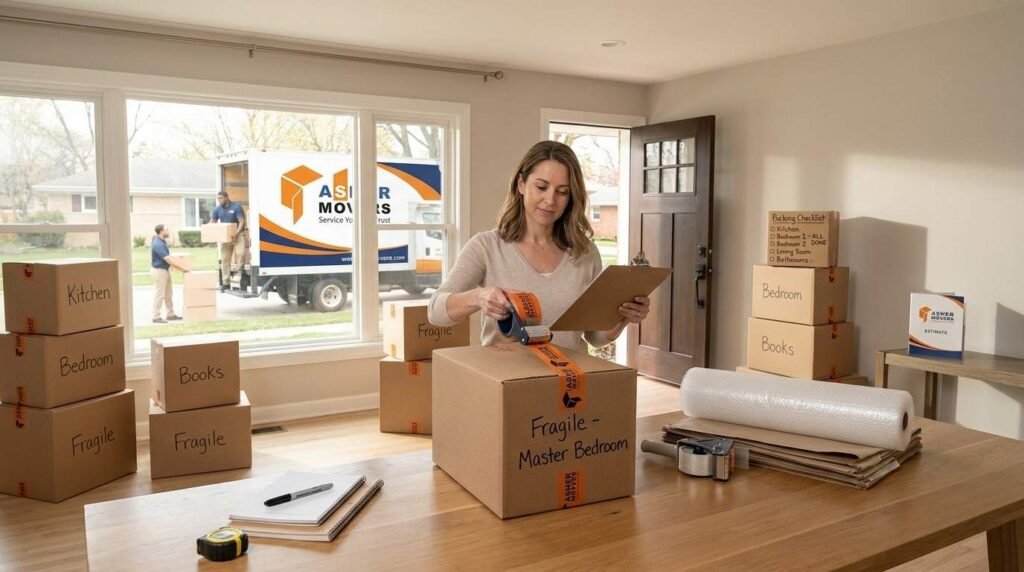
Most moves go sideways in the packing phase, not on the truck. I’ve seen it happen over and over rushed boxes, wrong materials, unlabeled chaos and every one of those problems was preventable.
Packing errors cause real damage: broken items, delayed moves, and extra costs that nobody budgeted for.
This guide covers the five biggest packing mistakes Skokie movers see most, why each one causes problems, and exactly what to do instead.
Mistake #1 Skipping a Packing Plan Before Moving Day
Why Winging It Costs You Time and Money
Packing without a plan is the single fastest way to turn a manageable move into a stressful one. When there’s no structure, people pack randomly mixing rooms, losing track of what’s boxed, and running out of supplies at the worst possible moment.
Last-minute packing leads to poor decisions. Fragile items end up in overstuffed boxes. Important documents get buried under kitchen towels. Movers arrive and half the house isn’t ready, which pushes the entire schedule back and can trigger additional hourly charges.
The cost isn’t just financial. The stress of unplanned packing follows you into the new space, where you’re left digging through unlabeled boxes for days.
How to Build a Simple Packing Timeline
Start packing six to eight weeks before your move date. That timeline sounds long, but it goes fast especially for families or anyone moving a full household.
Begin with the rooms you use least: storage areas, guest rooms, seasonal items, and decorative pieces. Work toward the rooms you use daily kitchen, bathrooms, and bedrooms in the final week. Pack one room completely before moving to the next.
Write down what you’ve packed and where. A simple notebook or a notes app works fine. Knowing exactly what’s in each box saves hours of searching on the other end.
Mistake #2 Using the Wrong Boxes and Packing Materials
The Box Problems That Lead to Broken Items
Grocery store boxes and random cardboard from the recycling bin seem like a smart, free option. They’re not. Used boxes have already been compressed, weakened, and exposed to moisture and they fail under the weight and stacking pressure of a real move.
A collapsed box on a moving truck means broken items, damaged furniture underneath it, and a claim conversation nobody wants to have. Dish packs, wardrobe boxes, and standard double-wall moving boxes exist for a reason: they’re engineered to hold weight and stack safely.
Fragile items packed in undersized or flimsy boxes are the most common source of breakage I see. The box is always the first line of protection.
What Packing Supplies Actually Protect Your Belongings
Use new, purpose-built moving boxes in the right sizes. Small boxes for heavy items like books and tools. Medium boxes for general household goods. Large boxes for lightweight bulky items like pillows and linens.
Wrap every fragile item individually in packing paper or bubble wrap before placing it in a box. Packing paper is better for most items it doesn’t leave residue and it’s easier to layer. Bubble wrap is ideal for anything with an irregular shape or extreme fragility.
Seal every box with two strips of packing tape across the bottom seam and two across the top. Tape the sides as well on heavier boxes. Skipping tape on the bottom is how boxes fail mid-carry.
Mistake #3 Overpacking or Underpacking Boxes
The Weight and Stability Problems Movers See Most
An overpacked box is a safety hazard. When a box weighs more than 50 pounds, it becomes difficult to carry safely, and the bottom seam is under constant stress. Movers deal with back injuries and box failures most often from boxes that were simply loaded too heavy.
An underpacked box is a different problem. When a box isn’t full, the contents shift during transport. Shifting causes items to collide, break, and arrive damaged even when they were individually wrapped. The box also loses structural integrity when it’s not filled properly, making it prone to crushing under stacked weight.
Both extremes cause damage. The goal is a box that’s full, firm, and within a safe weight range.
The Right Way to Fill a Box for a Safe Move
Place the heaviest items on the bottom of the box. Layer medium-weight items in the middle. Put the lightest items on top. This keeps the center of gravity low and prevents the box from tipping or collapsing inward.
Fill every gap with packing paper, foam peanuts, or soft items like dish towels and t-shirts. The box should feel solid when you press the top no give, no shifting. If you can hear items moving when you shake the box, add more fill material.
Keep every box under 50 pounds. If a box is getting heavy, stop and start a new one. Two lighter boxes are always safer than one overloaded one.
Mistake #4 Failing to Label Boxes Clearly
What Happens When Movers Can’t Read Your Labels
Unlabeled boxes create confusion at every stage of the move. Movers don’t know which room a box belongs in, so it ends up in the wrong place. You spend the first days in your new home hunting through stacks of identical brown boxes trying to find what you need.
Fragile items without clear markings get stacked under heavy boxes or handled without the extra care they need. A single missing “FRAGILE” label can mean the difference between a glass arriving intact and arriving in pieces.
Misplaced boxes also slow down the unloading process significantly. Every minute movers spend figuring out where something goes is time added to your bill.
A Labeling System That Actually Works on Moving Day
Label every box on at least two sides and the top. Use a thick black marker not a pen, not a thin marker. The label needs to be readable from across a room.
Write the destination room first, in large letters. Then add a short contents description below it. “KITCHEN pots, lids, utensils” is far more useful than just “KITCHEN.” Add “FRAGILE” and “THIS SIDE UP” in red marker on any box with breakables.
Color coding makes the system even faster. Assign a color to each room using colored tape or stickers. Movers can sort by color at a glance without reading every label. It cuts unloading time and puts every box exactly where it belongs.
Mistake #5 Packing Prohibited or Hazardous Items
Items Movers Cannot Legally or Safely Transport
Moving companies operate under federal and state transportation regulations that prohibit certain items from being loaded onto a moving truck. These aren’t arbitrary rules they exist because some items pose genuine fire, explosion, or contamination risks in an enclosed cargo environment.
Items movers cannot transport include flammable liquids like gasoline, lighter fluid, and paint thinner. Propane tanks, aerosol cans, ammunition, fireworks, and pool chemicals are also prohibited. Perishable food, plants, and pets fall into a separate category of items that simply cannot survive a move in a truck.
Packing these items without disclosing them puts your belongings, the movers, and the truck at risk. It also creates liability issues that can void your moving coverage entirely.
How to Handle Non-Allowable Items Before the Move
Start by going through your home specifically looking for prohibited items at least two weeks before your move date. Check the garage, basement, utility closets, and outdoor storage these are where most hazardous materials accumulate.
Dispose of flammable liquids and chemicals through your local household hazardous waste program. Many municipalities, including those in the Skokie, IL area, offer scheduled drop-off events or permanent collection sites. Use up or donate perishable food in the weeks leading up to the move.
Items you want to keep like a propane grill tank or a can of paint for touch-ups transport those yourself in your personal vehicle. Keep them in a ventilated area and never in an enclosed trunk for extended periods. Your moving company can give you a complete list of non-allowable items specific to your move when you book.
Frequently Asked Questions
What is the most common packing mistake people make?
Skipping a packing plan is the mistake I see most often. People underestimate how long packing takes and start too late, which leads to rushed decisions, poor box choices, and disorganized labeling across the board.
How far in advance should I start packing for a move?
Start six to eight weeks before your move date. Begin with storage areas and rooms you use least, then work toward daily-use spaces in the final week. One room at a time keeps the process manageable.
Can movers pack my belongings for me?
Yes. Professional packing services are available through most moving companies, including full-service packing where movers handle every room. It’s a practical option for busy households, fragile collections, or anyone who wants the job done right without the stress.
What items are movers not allowed to transport?
Movers cannot transport flammable liquids, propane tanks, aerosol cans, ammunition, fireworks, pool chemicals, perishable food, or live plants. These items are prohibited under transportation regulations. Transport them yourself or dispose of them properly before moving day.
How do I know if a box is packed correctly?
Press the top of the sealed box it should feel firm with no give. Shake it gently nothing should shift or rattle. Pick it up it should be under 50 pounds. If it passes all three checks, it’s packed correctly.
Conclusion
Packing mistakes are the most preventable part of a difficult move. A solid plan, the right materials, proper box weight, clear labels, and awareness of prohibited items eliminate the problems that derail moving day.
These five mistakes show up on moves of every size from studio apartments to full commercial relocations. Avoiding them protects your belongings and keeps the entire process on schedule.
We’re here to make your Skokie move go exactly as planned. Contact ASHER MOVERS LOCAL & LONG DISTANCE today and let’s get your move done right.
